Dense green cloud forest on a steep ridge beneath grey clouds, with a spreading tree in the foreground

Honduras

Tegucigalpa, the Centre & the Pacific South

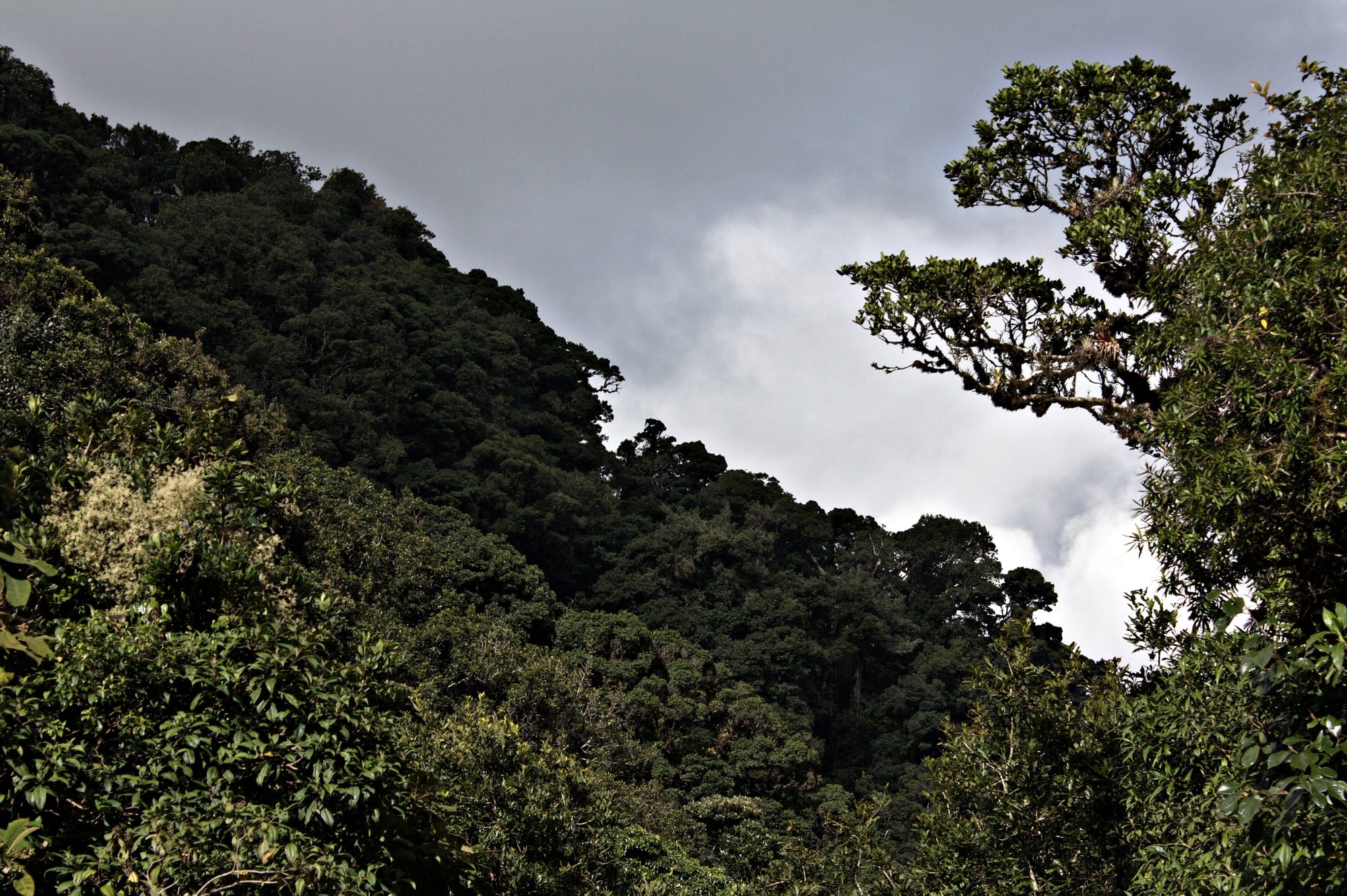
Cloud forest seen from Rancho Quemado in La Tigra National Park, above Tegucigalpa. (Jorge Luis Murillo Palma / Wikimedia Commons · CC BY-SA 3.0)

The heart of Honduras, running from the capital Tegucigalpa and the old colonial capital of Comayagua through the pine-covered Lenca highlands of La Paz and Intibucá down to the hot Pacific lowlands of Choluteca and Valle on the Gulf of Fonseca — a region of mining towns, government, cool mountains and shrimp farms.

Explore Tegucigalpa, the Centre & the Pacific South

History

Lenca-speaking peoples farmed the central and western highlands long before the Spanish arrived, and the Yarumela site in the Comayagua valley shows settled villages there from well before the Common Era. The Spanish founded Comayagua in 1537, and it became the seat of the colonial province and its bishopric, the political centre of Honduras for more than three centuries.

Silver changed the balance. Mining camps grew in the hills to the east, and the Real de Minas de Tegucigalpa, founded in 1578, prospered alongside smaller camps such as Santa Lucía, Valle de Ángeles and Yuscarán. Rivalry between the two towns shaped nineteenth-century politics until President Marco Aurelio Soto moved the capital to Tegucigalpa in 1880. Francisco Morazán, the liberal leader of the Central American federation, was born in Tegucigalpa, and José Cecilio del Valle, who drafted the 1821 act of independence, came from Choluteca. In the 1880s the US-owned Rosario Mining Company opened large silver mines at San Juancito, above the capital.

In the twentieth century the Pacific south turned to cattle, cotton, melons and, later, farmed shrimp, and the port moved from Amapala to San Lorenzo on the mainland. Hurricane Mitch in 1998 flooded the capital and Choluteca, where the river shifted course and left a new bridge standing over dry land. In 2009 the army removed President Manuel Zelaya and flew him out of the country; he returned secretly months later and sheltered in the Brazilian embassy in Tegucigalpa while the crisis played out. In 2016 the Lenca environmental campaigner Berta Cáceres, who had opposed a dam on the Gualcarque River, was murdered at her home in La Esperanza, a case that drew international attention.

Culture & Customs

The centre is mestizo and Spanish-speaking, with a strong Catholic life. The small clay figure of the Virgin of Suyapa, patroness of Honduras, is kept in the village of Suyapa on the capital's edge and its large basilica, and her feast in early February draws pilgrims from across the country. Comayagua's Holy Week is the country's best known: townspeople spend the night before Good Friday laying carpets of coloured sawdust along the processional streets.

The highlands of La Paz and Intibucá are the Lenca heartland. The Lenca language has almost disappeared, but communities keep their own identity, village authorities and rituals such as the guancasco, a ceremonial exchange of visits between neighbouring villages and their patron saints. Women wear bright headscarves, and the region is known for Lenca pottery and weaving. Danlí in El Paraíso holds a national maize festival every August and is a centre of cigar making. In the south, cattle ranching gives the culture a cowboy streak, with rodeos and horse parades at the town fairs.

Daily Life

The Distrito Central — Tegucigalpa and its twin Comayagüela across the Choluteca River — has well over a million people and dominates the region: government, universities, embassies, markets and a sprawl of hillside neighbourhoods. Comayagua, Choluteca and Danlí are the other main towns, each with roughly 170,000 to 215,000 people in their municipalities, and La Esperanza is the highland market centre.

Much of the working population depends on the state, commerce and informal trade. Coffee is grown around Marcala in La Paz and in El Paraíso; the south lives from shrimp farms, melon and sugar exports, fishing and the traffic of the Pan-American Highway and the port of San Lorenzo. The US military's Joint Task Force-Bravo is based at Soto Cano, near Comayagua, where the Palmerola civilian airport opened in 2021.

The capital's traffic, water shortages in the dry season and extortion of bus drivers and small shops are everyday concerns. Life in the highland towns is slower, organised around the Sunday market and the church, and large numbers of families here depend on relatives working in the United States.

Food

The capital eats the national food: plates of rice, beans, plantain, cuajada (fresh curd cheese) and cream; pastelitos de carne, fried meat-filled turnovers; and nacatamales, maize dough filled with pork or chicken and wrapped in banana leaves for Christmas and weekends. Sopa de mondongo, a tripe soup with vegetables, is a Saturday classic, and street stalls sell pinchos and carne asada with chismol, a chopped tomato and onion salsa.

In the highlands, maize dominates: tamalitos de elote made from fresh corn, atol (a warm corn drink) and thick tortillas. Rosquillas, hard little rings of maize dough baked with cheese, are eaten with coffee, and Marcala's coffee is one of the best known Honduran origins. Yuscarán is known for its aguardiente, the clear cane spirit Hondurans call guaro.

The Pacific south brings seafood to the table, from shrimp farmed around the Gulf of Fonseca to fish and shellfish served with lime and chilli, and its heat is fought with horchata, tamarind drinks and sweet melons from the Choluteca plain.

Attractions & Natural Wonders

Tegucigalpa's old centre gathers the cathedral of San Miguel, the Plaza Morazán and the National Identity Museum, while the Basilica of Suyapa stands on the eastern edge and the Cristo del Picacho statue overlooks the city from the United Nations park. Just outside, Valle de Ángeles and Santa Lucía are old mining villages of cobbled streets and craft shops, and La Tigra National Park, established in 1980, protects cloud forest on the mountains to the north-east, with trails from the old Rosario mining town of San Juancito.

North along the CA-5, Comayagua keeps the country's finest colonial townscape: the Cathedral of the Immaculate Conception, the churches of La Merced and La Caridad, and a museum of colonial religious art. Further west, the Lenca villages of La Paz and Intibucá — around La Esperanza, Yamaranguila and the coffee town of Marcala — offer pottery workshops, pine-covered hills and markets.

East of the capital, Yuscarán is a hillside colonial town and Danlí the cigar town of El Paraíso. In the south, Choluteca has a colonial centre by its river and the Gulf of Fonseca begins at San Lorenzo. From the fishing village of Coyolito, boats cross to Amapala on the volcanic Isla del Tigre, with its old port buildings, its beaches and the island's volcanic cone.

Cities in Tegucigalpa, the Centre & the Pacific South

Planning basics

Budget

The centre and south are among the cheapest parts of Honduras. Tegucigalpa has the widest range of hotels and restaurants, with the better ones concentrated in a few secure districts; Comayagua, La Esperanza and Choluteca have simple, inexpensive hotels and comedores. Getting to Amapala means a bus to Coyolito and a short boat crossing, both cheap.

Daily Budget Midrange
USD 65–130 (hotel in a secure district of the capital, restaurant meals, taxis and a driver for day trips)
Daily Budget Shoestring
USD 25–40 (guesthouse, comedor meals, intercity buses)

Use app or hotel-arranged taxis in Tegucigalpa rather than hailing on the street; outside the capital, carry cash in small notes.

Safety

Tegucigalpa and Comayagüela have serious gang crime, extortion and armed robbery, concentrated in poorer neighbourhoods, markets and bus terminals, and a state of exception against the gangs was declared in the capital in December 2022. Comayagua, La Esperanza, the Lenca villages and Amapala are much calmer, with petty theft the usual risk. Roads in the south carry heavy lorry traffic to the borders.

In the capital stay in well-known districts, avoid walking after dark and do not use city buses; do not travel by road at night. Check current official travel advice before travelling.

Climate

Altitude sets the weather. Tegucigalpa, at about 1,000 metres, is warm by day and mild at night; La Esperanza and the Lenca highlands are higher and noticeably cool, with chilly nights from November to February. The Pacific lowlands of Choluteca and Valle are among the hottest places in the country, above 35°C in March and April. Rain falls mainly from May to October, with a drier spell in mid-summer.

Summer
rainy season May–October; 25–30°C in the capital, cooler in the highlands, over 33°C in the south
Winter
dry season November–April; mild days in the capital, cold nights in La Esperanza, very hot and dusty on the Pacific plain by March

Transportation

Tegucigalpa and Palmerola airport, near Comayagua, are the gateways. The CA-5 highway runs north from the capital past Comayagua towards San Pedro Sula, and the Pan-American Highway crosses the south through Choluteca between the El Salvador and Nicaragua borders. Coaches link the main towns, and minibuses reach the highland villages, slowly. Amapala is reached by boat from Coyolito.

Travel between towns in daylight on established coach companies; a hired driver makes La Tigra and the Lenca villages much easier.

Best Time to Visit

November to February, when the rains have stopped, the highlands are green and the Pacific south is not yet at its hottest. Holy Week brings sawdust carpets to Comayagua's streets and crowds everywhere; the feast of the Virgin of Suyapa in early February fills the capital with pilgrims.