History
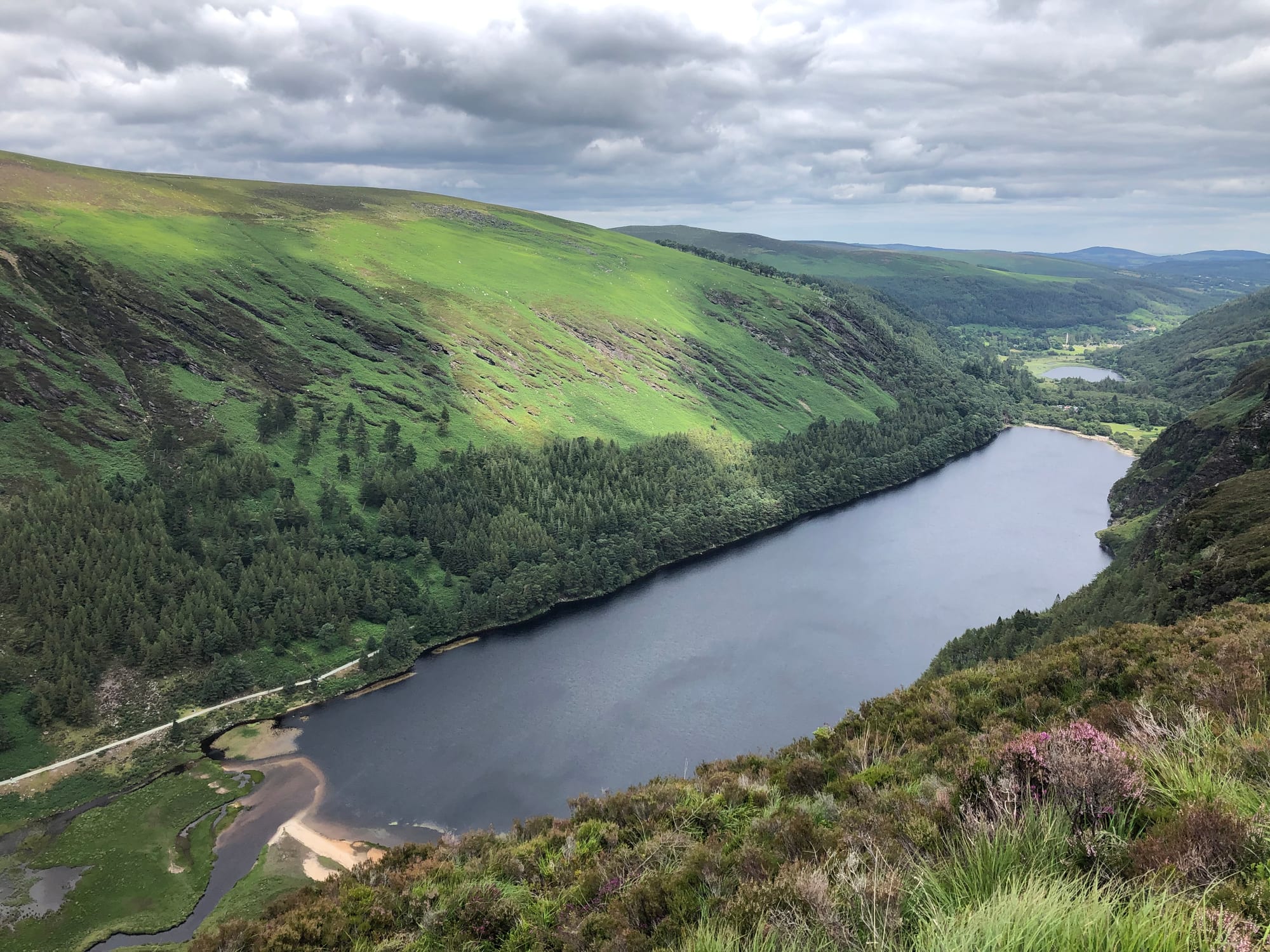
The east holds Ireland's densest prehistoric landscape. Farmers in the Boyne Valley raised the great passage tombs of Newgrange, Knowth and Dowth around 3100 BC, aligning Newgrange so that the midwinter sunrise lights its inner chamber, and the Hill of Tara in Meath later became the ceremonial seat of the high kings. Christianity brought monastic cities — Glendalough under St Kevin, Clonmacnoise on the Shannon under St Ciarán, Kells, Monasterboice and Kildare, whose foundation is linked to St Brigid. Viking raiders set up a fortified base on the Liffey in 841 that grew into Dublin, and founded Wexford too.
The Anglo-Norman invasion began on the Wexford coast in 1169, and within decades the newcomers had built Trim Castle, walled Kilkenny and Drogheda and made Dublin the capital of the English lordship. By the 15th century the Crown's direct control had shrunk to the Pale, a strip around Dublin whose name survives in "beyond the pale". Kilkenny hosted the Confederate Catholic assembly of the 1640s, Cromwell sacked Drogheda and Wexford in 1649, and William III's victory at the Boyne in 1690 settled Protestant rule for a century.
Georgian Dublin became the second city of the British Isles, but the Act of Union in 1800 drained its parliament and its wealth. The 1798 rebellion was fought hardest in Wexford, ending at Vinegar Hill; the Easter Rising of 1916 was a Dublin event, centred on the General Post Office. Since independence the capital has drawn in people from every county, and its commuter belt now reaches deep into Meath, Kildare, Wicklow and Louth.