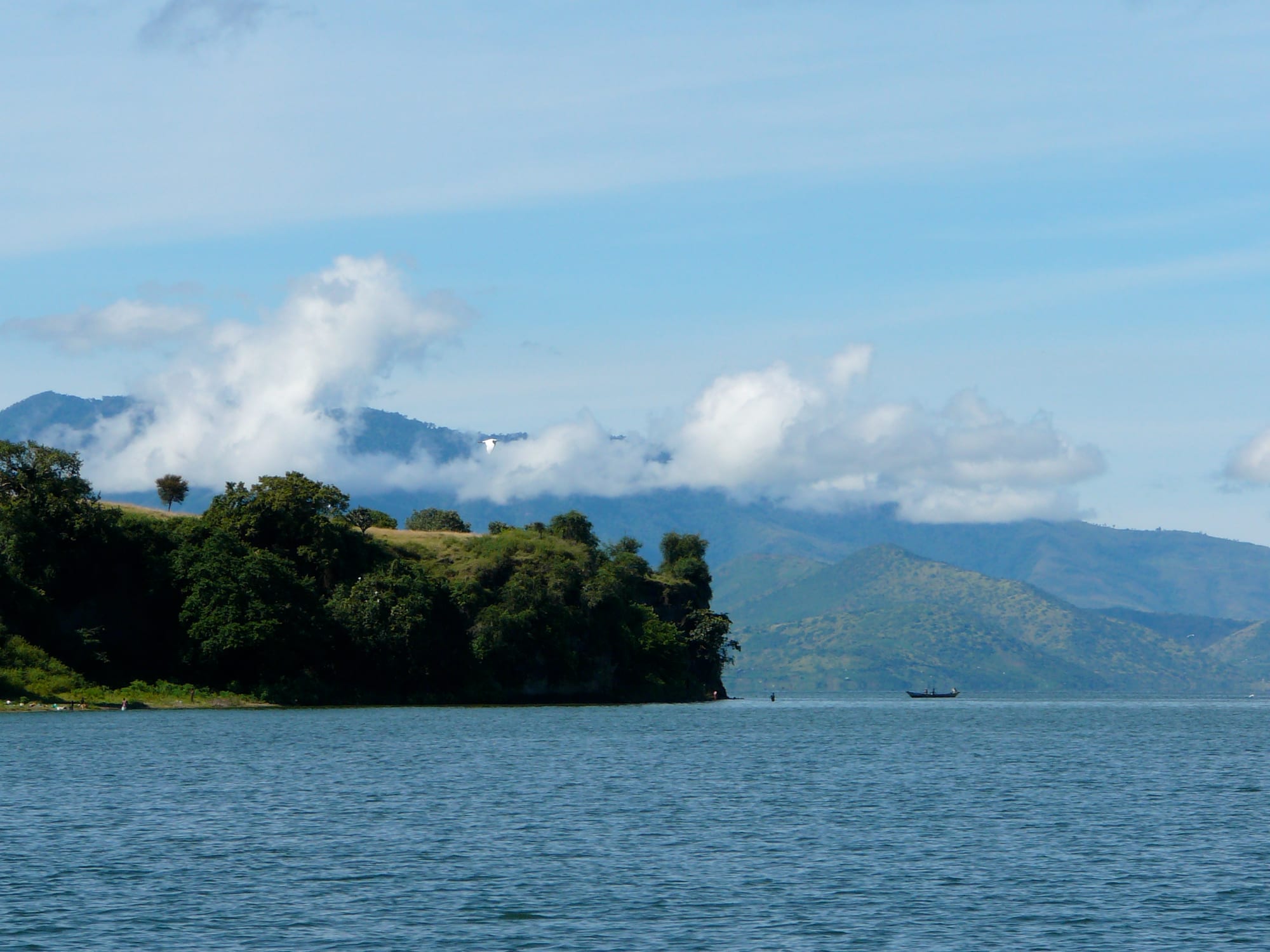
A wooded green headland on calm blue lake water, with cloud-capped hills behind and a small boat offshore

Kenya

Kisumu, Kakamega & Western Kenya

The shore of Rusinga Island on Lake Victoria, in Homa Bay County. (Ryan Harvey / Wikimedia Commons · CC BY-SA 3.0)

Kenya's green and densely farmed west, joining the old Nyanza and Western provinces between Lake Victoria and the Ugandan border — Luo fishing country around Kisumu and the lake islands, the Gusii highlands of Kisii, and the Luhya counties of Kakamega, Vihiga, Bungoma and Busia, with Kenya's last lowland rainforest and the slopes of Mount Elgon.

Explore Kisumu, Kakamega & Western Kenya

History

Bantu-speaking farmers — the ancestors of the Luhya, the Gusii and the Suba — and Nilotic Luo migrants from the upper Nile valley, who reached the lake region from about the 15th century, shaped the west. At Thim Lich Ohinga in Migori, lakeside communities of the 15th century or earlier built enclosures of dry-stone walling, now a UNESCO World Heritage Site. Kingdoms were small, though the Wanga kingdom of the Luhya, centred at Mumias, allied itself with the British in the 1890s.

The Uganda Railway reached the lake in 1901 at a new port named Port Florence, soon renamed Kisumu, and the region was transferred from the Uganda Protectorate to the East Africa Protectorate in 1902. Missions, schools and the railway turned the west into a reservoir of labour and a centre of education, and Luo and Luhya workers became the backbone of trade unions in Nairobi and Mombasa.

The region's political history since independence is tied to the Luo leaders Oginga Odinga, born at Bondo in Siaya, and his son Raila Odinga, and to Tom Mboya, whose family home was Rusinga Island, assassinated in 1969. Tensions with central government have run high at several elections; Kisumu saw deadly unrest during the 2007–08 post-election violence and again in 2017. Siaya's village of Nyang'oma Kogelo drew global attention as the family home of Barack Obama's father.

Culture & Customs

Three large communities share the region. The Luo, around the lake, are known for elaborate funerals that bring families home from across Kenya, for fishing traditions and for benga, the guitar-driven dance music that grew from the nyatiti lyre and spread across East Africa from the 1960s. The Luhya, a cluster of more than a dozen sub-groups including the Bukusu, Maragoli, Wanga and Isukha, have strong traditions of circumcision ceremonies: the Bukusu imbalu takes place in August of even-numbered years, with dancing and drumming. Luhya communities also keep up a traditional sport of fights between bulls.

The Abagusii of Kisii and Nyamira form a separate Bantu-speaking island in the highlands, known for soapstone carving at Tabaka and for close-knit farming communities. The Kuria of Migori, the Teso of Busia and the Suba of the islands add further languages. Christianity is dominant, including large African independent churches, and football is followed intensely, with AFC Leopards drawing Luhya support and Gor Mahia Luo loyalty.

Daily Life

This is one of the most densely populated parts of Kenya. Kisumu, with about 400,000 people, is the region's city and its lake port; Kakamega, Kisii, Bungoma, Busia, Homa Bay and Migori are busy county towns. Most families farm small plots of maize, beans, cassava and bananas, and the region has long grown sugar cane for mills such as Mumias and Nzoia, whose fortunes have been troubled. Tea covers the Kisii and Nyamira hills, gold is dug by small-scale miners in Migori, and fishing supports tens of thousands around the lake.

Life around Lake Victoria turns on the catch. Boats go out at night and land at beaches where traders buy fish at dawn; water hyacinth periodically chokes bays near Kisumu, and falling fish stocks and high rates of HIV in lakeside communities are long-standing concerns. Busia and Malaba are busy border towns, crowded with lorries heading to Uganda, and boda-boda motorbike taxis are the everyday transport across the region.

Food

Fish and ugali define the lake. Tilapia, fried whole or cooked in a tomato stew, is the classic Kisumu meal, eaten at restaurants along the shore, while Nile perch fillets are sold widely. Omena, tiny silver fish dried in the sun on the beaches, are fried with tomatoes and onions and eaten with ugali, called kuon in Dholuo. Traditional greens such as osuga and apoth are prized.

Among the Luhya, chicken, often cooked as the stew ingokho, is the dish of honour and a symbol of hospitality, served with obusuma, the Luhya word for ugali, and vegetables such as omrere, jute leaves. In the Kisii highlands, bananas and finger millet are staples. Local drinks include busaa, a traditional brew.

Attractions & Natural Wonders

Kisumu is the base for the lake. Dunga beach, with its papyrus wetland, and Hippo Point lie on the shore, the Kisumu Impala Sanctuary keeps impala and other animals on the waterfront, and the balancing rocks of Kit Mikayi stand in the countryside west of the city. South of the Winam Gulf, Rusinga Island, reached by causeway, has the fossil sites where Mary Leakey found the Miocene ape Proconsul in 1948, as well as Tom Mboya's mausoleum; neighbouring Mfangano Island is known for its ancient rock paintings.

Inland from Homa Bay, Ruma National Park in the Lambwe Valley protects roan antelope, Rothschild's giraffe and other grassland species, and nearby Lake Simbi is a small volcanic crater lake. Thim Lich Ohinga in Migori is the region's World Heritage Site. The Kisii highlands, with their tea estates and the soapstone workshops of Tabaka, rise to the east.

To the north, Kakamega Forest is Kenya's only surviving fragment of the Guineo-Congolian rainforest, with blue, redtail and De Brazza's monkeys, some 367 recorded bird species and the Isecheno and Lirhanda nature reserves. Beyond it, the farmland of Bungoma climbs towards the Kenyan slopes of Mount Elgon, an extinct volcano on the Ugandan border known for its caves and forest.

Cities in Kisumu, Kakamega & Western Kenya

Planning basics

Budget

Western Kenya is one of the cheapest parts of the country. Guesthouses, local restaurants serving fish and ugali, and matatus cost well below Nairobi prices, and park fees at Kakamega and Ruma are far lower than on the safari circuit. Upmarket hotels are found mainly in Kisumu and on the islands.

Daily Budget Midrange
USD 70–150 (good hotel in Kisumu, restaurant meals, a boat or park day)
Daily Budget Shoestring
USD 25–45 (guesthouse, local food, matatus and boda-bodas)

Hire boats to Rusinga, Mfangano and the lake beaches through lodges or recognised landing sites, and agree the price and life jackets first.

Safety

The west is generally calm for visitors, though Kisumu and other towns have seen protests and heavy-handed policing during disputed elections, as in 2007–08 and 2017. Petty theft occurs in towns and markets. Lake Victoria carries risks of its own: bilharzia in the water, hippos near the shore and overloaded boats. Malaria is common across the region.

Do not swim in the lake, travel on boats only with life jackets, take malaria precautions, and avoid political rallies at election time. Check current official travel advice before travelling.

Climate

Wetter than most of Kenya, with rain possible in almost any month. Kisumu on the lake shore is hot and humid; the highlands of Kisii, Nyamira and Kakamega are cooler and among the rainiest places in the country, often with heavy afternoon thunderstorms. Mount Elgon's upper slopes are cold.

Summer
January–February is the hottest, driest time, around 28–32°C in Kisumu
Winter
June–August is slightly cooler and still showery, 24–28°C in Kisumu by day

Transportation

Kisumu has an airport with frequent flights from Nairobi, and road journeys from the capital take most of a day. Good roads link Kisumu with Kakamega, Busia, Bungoma and Kisii, and matatus and boda-boda motorbike taxis reach most towns. Rusinga is joined to the mainland by a bridge, while Mfangano is reached by boat. Busia and Malaba are the main road crossings into Uganda.

Fly to Kisumu to save a long day on the road, and wear a helmet on boda-bodas.

Best Time to Visit

December to February and June to September are the driest periods and best for Kakamega's forest trails, Ruma and Mount Elgon. The long rains, from about March to May, are especially heavy here and can make rural roads difficult. Kakamega's birdlife is good all year.