History
The Bou Regreg estuary has been settled since antiquity: the Phoenician and Roman town of Sala stood at Chellah, on the Rabat side. The Almohads built a fortified camp, the ribat that gave Rabat its name, and in the late 12th century Sultan Yaqub al-Mansur began a great mosque there whose minaret, the Hassan Tower, was never finished. The Marinids turned Chellah into a royal necropolis, while Salé, across the river, grew into the main port.
In the early 17th century Muslims expelled from Spain settled in Rabat's kasbah, and Salé and Rabat became a base for corsairs, the "Salé Rovers", who raided shipping as far as the British Isles and for a time governed themselves as an independent republic. Further south the Portuguese held Mazagan, today's El Jadida, until 1769, and destroyed the town of Anfa in 1468; it was rebuilt as Casablanca, Dar el-Beida, in the 18th century under Sultan Mohammed ben Abdallah.
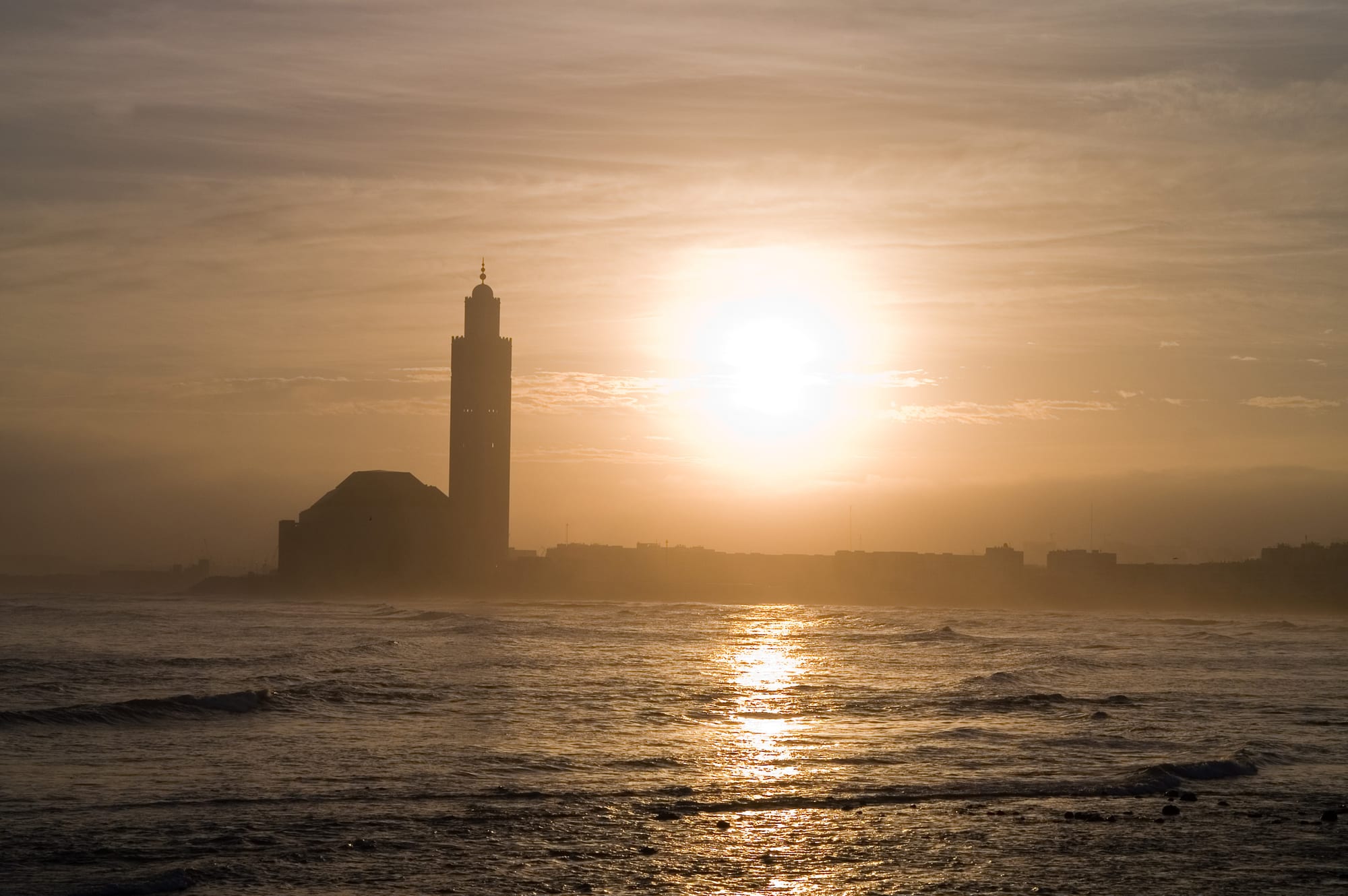
The French made Rabat the capital of their protectorate in 1912, and Resident-General Lyautey laid out a new administrative city beside the medina. Casablanca became the protectorate's port and industrial centre, expanding from a small town into the country's largest city, and in 1943 Roosevelt and Churchill met there at the Anfa Conference. Kénitra, then called Port-Lyautey, grew as a river port and later hosted an American naval air station. After independence Rabat remained the capital, and Casablanca's slums, strikes and riots made it the focus of social unrest in the 1960s and 1980s. The bombings of 2003 in Casablanca, and the building of the Hassan II Mosque, completed in 1993, both marked the city's modern history.