History
Mohenjo-daro, on the right bank of the Indus near Larkana, was one of the great cities of the Indus Valley Civilisation around 2500 BC, laid out on a grid with brick houses, wells and covered drains; it was excavated from the 1920s. Much later, Alexander the Great's army passed down the Indus, and Buddhist communities left stupas across the valley. In 711–712 the Arab general Muhammad bin Qasim took the port of Debal and conquered Sindh, which Pakistanis often call the "gateway of Islam" in South Asia.
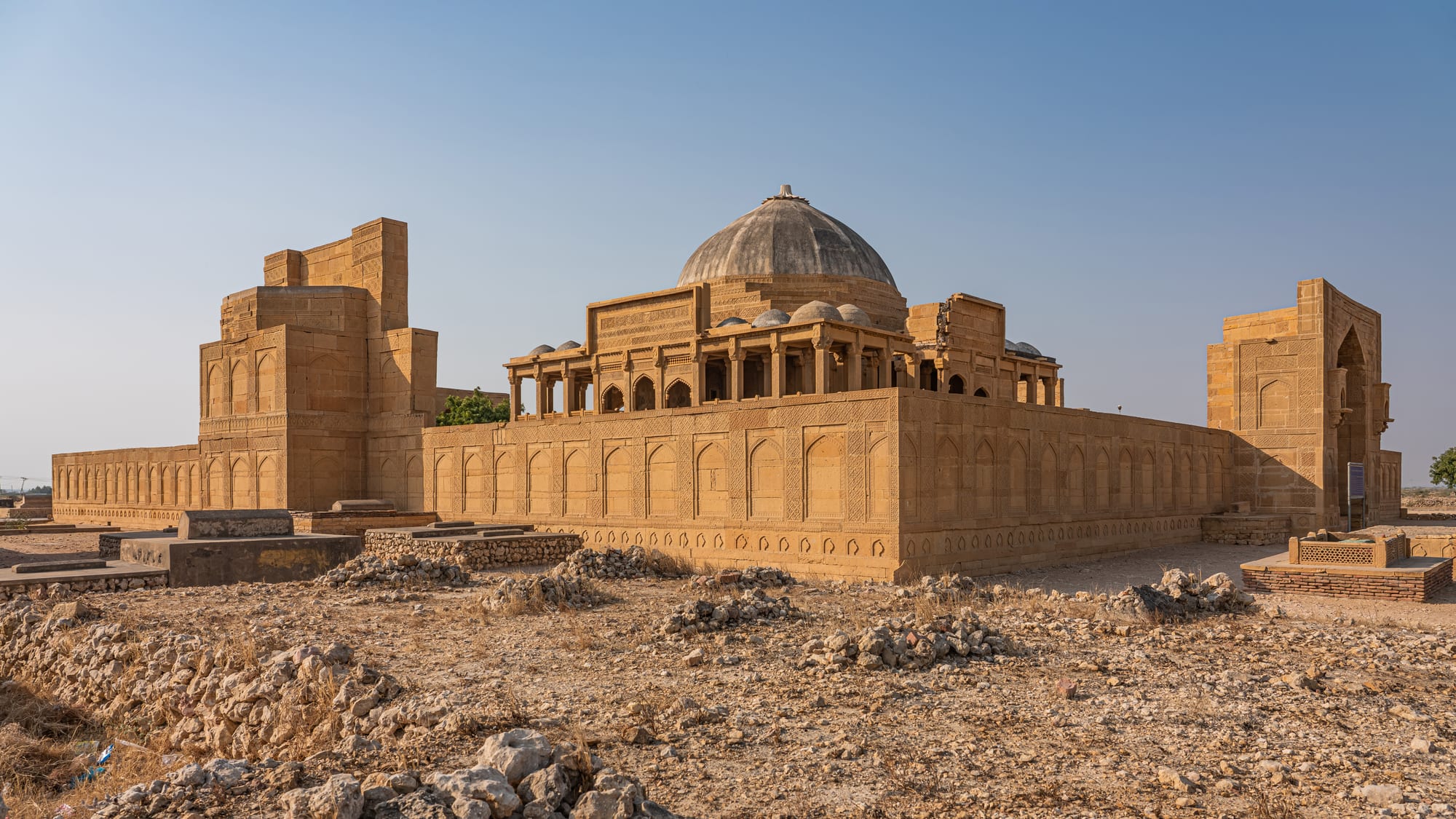
Local dynasties followed: the Soomras, then the Sammas, who ruled from Thatta and were buried on Makli hill, then the Arghuns and Tarkhans, before the Mughals absorbed the province. In the 18th century the Kalhoras and then the Baloch Talpur Mirs ruled Sindh, the Talpurs from Hyderabad. The British under Charles Napier defeated the Mirs at Miani in 1843 and ran Sindh from Bombay until it became a separate province in 1936, by which time Karachi had grown from a fishing village into a major port.
Partition transformed the province. Many Hindu Sindhis left for India, while Urdu-speaking migrants from India, the Muhajirs, settled in Karachi and Hyderabad, and Karachi served as the national capital until the move north in the late 1950s. The ethnic politics that followed produced the Muhajir-based MQM and decades of violence in Karachi, peaking in the 1990s. Rural Sindh, meanwhile, has been the stronghold of the Bhutto family's Pakistan Peoples Party, whose leaders are buried at Garhi Khuda Bakhsh near Larkana.