History
Harappa, on an old course of the Ravi near Sahiwal, gave its name to the Indus Valley Civilisation, whose cities flourished here from around 2600 BC. Later, Taxila became the great city of Gandhara, visited by Alexander the Great in 326 BC and ruled in turn by Mauryans, Indo-Greeks and Kushans, whose Buddhist monasteries made it a centre of learning. Multan, one of the oldest continuously inhabited cities in South Asia, fell to the Arab conqueror Muhammad bin Qasim in the early 8th century and later became a stronghold of Sufi mystics.
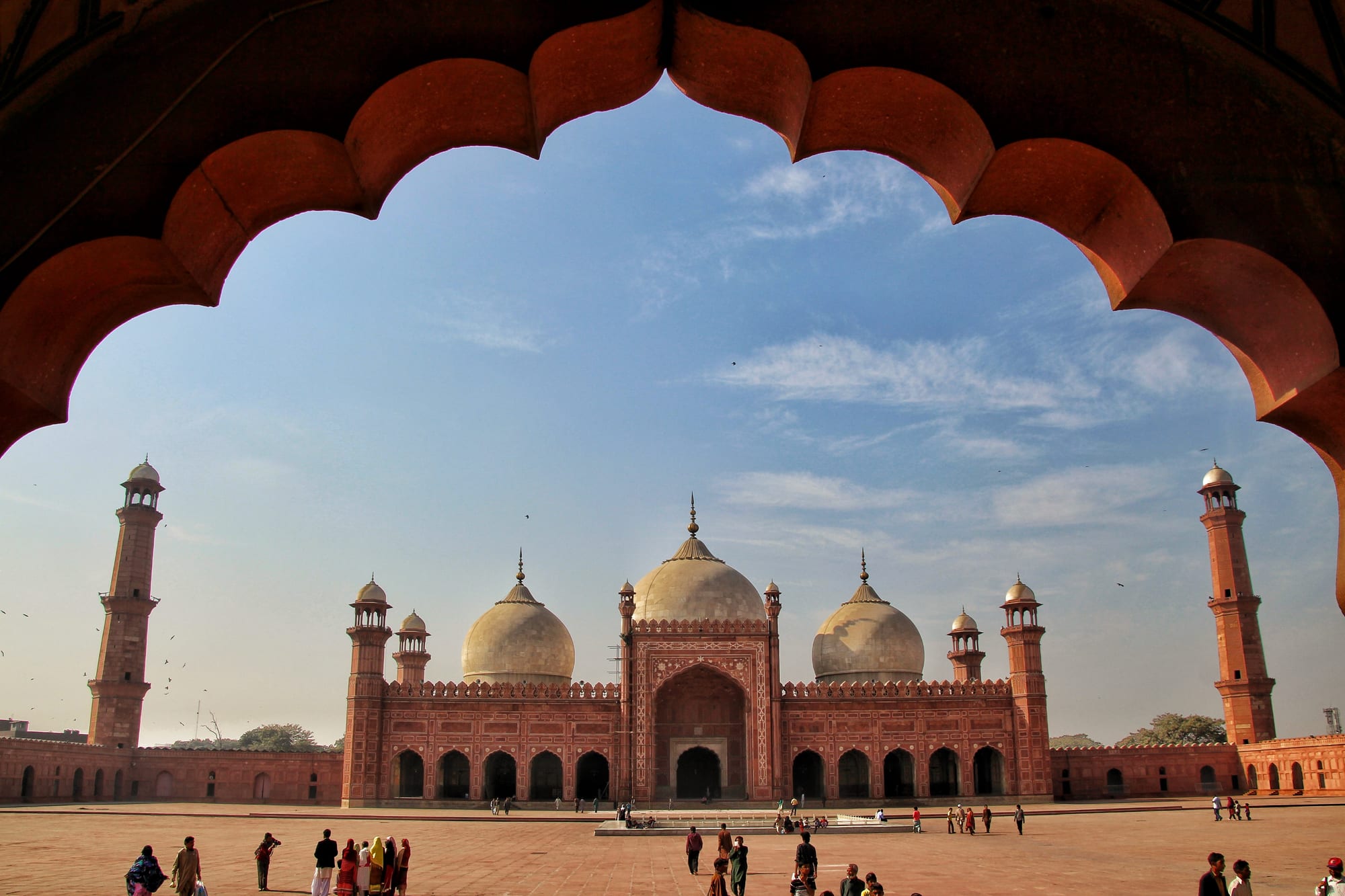
Lahore rose under the Ghaznavids in the 11th century, when the Sufi scholar Ali Hujwiri, now revered as Data Ganj Bakhsh, settled there. The Mughals made it one of their capitals: Akbar held court in Lahore in the late 16th century, Jahangir was buried across the Ravi at Shahdara, Shah Jahan laid out the Shalimar Gardens and Aurangzeb built the Badshahi Mosque. In 1799 Ranjit Singh took the city and made it the capital of the Sikh Empire, which the British annexed in 1849 after two wars.
At a session in Lahore in 1940 the Muslim League passed the resolution demanding a Muslim homeland, and Minar-e-Pakistan marks the spot. Partition in 1947 cut Punjab in two; Hindus and Sikhs fled east and Muslims fled west amid massacres. Rawalpindi, headquarters of the army, served as a temporary capital while Islamabad was built beneath the Margalla Hills in the 1960s to a plan by the Greek architect Constantinos Doxiadis. Rawalpindi has also been the scene of national tragedies: Prime Minister Liaquat Ali Khan was assassinated in what is now Liaquat Bagh in 1951, Zulfikar Ali Bhutto was hanged there in 1979, and his daughter Benazir was killed after a rally in the same park in 2007.