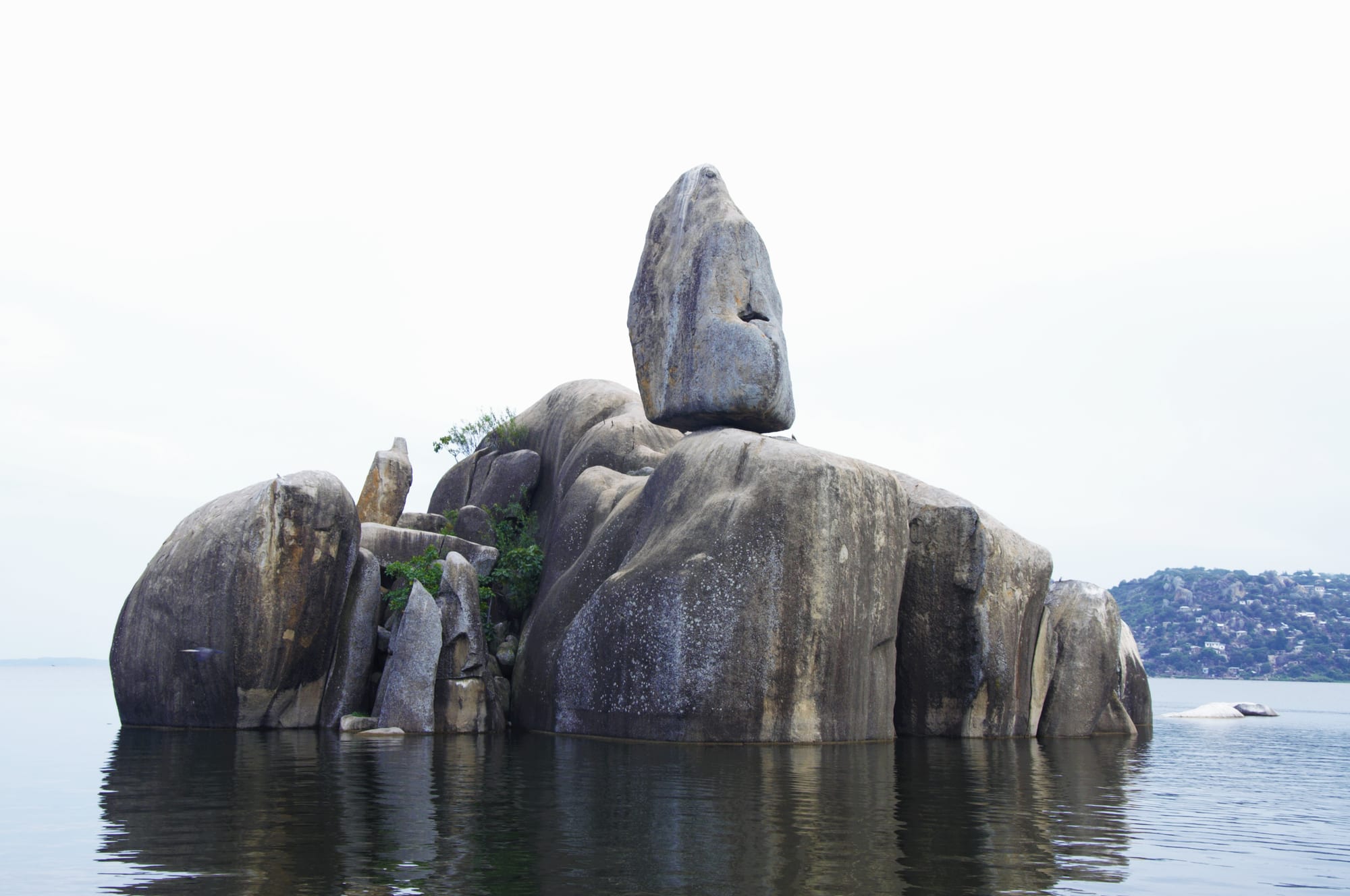
A pile of huge rounded granite boulders with a tall balanced rock on top, rising from calm lake water under a pale sky

Tanzania

Mwanza & Lake Victoria

Bismarck Rock, the granite outcrop in Lake Victoria off the shore of Mwanza. (Prof.Chen Hualin / Wikimedia Commons · CC BY-SA 4.0)

Tanzania's north-west, wrapped around the southern shores of Lake Victoria — the Sukuma heartland of Mwanza, Shinyanga, Simiyu and Geita, the Mara country around Musoma, and the green Haya hills of Kagera — a populous region of fishing, cotton and gold mining that also takes in most of the Serengeti's western and northern reaches.

Explore Mwanza & Lake Victoria

History

The lands around the southern lake were settled by Bantu-speaking farmers and herders over many centuries. In the west, the Haya formed small kingdoms such as Kiziba and Karagwe, ruled by royal clans and linked to the kingdoms of what is now Uganda; Karagwe reached its height in the 19th century under its king, Rumanyika. South of the lake the Sukuma lived in many small chiefdoms under ntemi rulers rather than a single state.

German rule arrived in the 1890s, with posts at Mwanza and Bukoba, and in the First World War the British attacked Bukoba from the lake in 1915. Under British rule Sukumaland became the heart of Tanganyika's cotton growing, and in 1940 the Canadian geologist John Williamson found diamonds at Mwadui in Shinyanga, opening the first significant diamond mine outside South Africa. In 1922 Julius Nyerere was born at Butiama, near Musoma, a chief's son who would lead the country to independence.

In 1978 Idi Amin's Uganda invaded and annexed the Kagera Salient north of the river; Tanzania drove the invaders out and pushed on to Kampala, toppling Amin in 1979. Kagera had Tanzania's first documented case of HIV and was hit hard by the epidemic, and in 1994 it received hundreds of thousands of refugees fleeing the Rwandan genocide. The lake has seen tragedy too: the ferry MV Bukoba sank near Mwanza in 1996 and the MV Nyerere capsized off Ukerewe in 2018, each with heavy loss of life. John Magufuli, president from 2015 to 2021, came from Chato in Geita and is buried there.

Culture & Customs

The Sukuma are Tanzania's largest ethnic group, and their language is heard across Mwanza, Shinyanga, Simiyu and Geita. Cattle carry wealth and status, farming follows the rains, and dance is taken seriously, from harvest dances to the buchwezi, danced with snakes; Sukuma culture is shown at the Bujora Sukuma Museum near Mwanza.

In Kagera the Haya speak a language close to those of Uganda and share its banana-and-coffee culture. Coffee cherries were once chewed as a sign of hospitality and in ceremonies, and Bukoba has a long reputation for producing teachers, clergy and civil servants. Around Musoma live the Kuria, Jita and Zanaki, Nyerere's own people, and the Kerewe of Ukerewe Island keep their own island traditions.

Christianity, Catholic and Protestant, predominates in the region, alongside older beliefs that still hold weight in the countryside. Witchcraft accusations have long been a source of violence here, and the region became notorious for attacks on people with albinism, whose body parts were sought by witchdoctors; prosecutions, bans on traditional healers and public campaigns since the late 2000s have not ended them.

Daily Life

Mwanza, with over a million people in its city districts, is Tanzania's second-largest city and the lake's main port: a busy, hilly place of granite boulders, fish-processing plants, markets and ferries. Musoma, Bukoba, Shinyanga, Geita and Bariadi are regional towns, and the countryside is among the most densely farmed in Tanzania.

The economy rests on the lake, the soil and the rock. Fishing for Nile perch, tilapia and dagaa supports hundreds of thousands of people, and perch fillets are exported from Mwanza's factories, though catches have come under pressure. Cotton and cattle dominate Sukumaland, bananas and coffee Kagera, and gold is mined on an industrial scale around Geita and by small-scale diggers across the region, with diamonds still coming from Mwadui.

Days start early at the fish landings and markets, and the evening brings people out along Mwanza's lakeshore. Current issues include overfishing, water hyacinth and pollution in the lake, mercury use by small-scale gold miners, and the unrest that followed the October 2025 election, when protests in Mwanza were met by security forces.

Food

Fish from Lake Victoria defines the table. Sato, the tilapia, is fried whole or simmered in tomato and onion sauce; sangara, the large Nile perch, is cut into steaks or fillets; and dagaa, the small silver fish dried on racks along the shore, are fried with tomatoes and eaten with ugali. Mwanza's lakeside grills serve fish straight from the boats, and smoked and dried fish travel by bus far across the country.

In Sukumaland ugali is the staple, made from maize or, in drier areas, sorghum and cassava, and eaten with fish, beans, greens and milk from the family herd. Rice grown in the lakeside plains is an important crop and a favoured food for celebrations.

Kagera has a different kitchen. The Haya staple is matoke, green bananas steamed in their leaves and mashed, eaten with beans, groundnut sauce or meat. Senene, grasshoppers fried with salt and onion, are a seasonal delicacy when they swarm, especially around Bukoba, and are sold by the bag in markets and at bus stops. Coffee is one of the region's main cash crops, and local banana beer and spirit are brewed at home in the villages.

Attractions & Natural Wonders

Mwanza is known as Rock City for the granite boulders scattered over its hills and shore, and Bismarck Rock, a balanced stack standing in the lake off the waterfront, is its emblem. Saanane Island, a small national park reached by boat from the city, has rock hyraxes, vervet monkeys and lake views, and the Bujora Sukuma Museum lies at Kisesa on the Musoma road. Ukerewe, the largest island in the Tanzanian part of the lake, is a ferry ride away.

Rubondo Island National Park, in the south-west of the lake, is a quiet forested island reached by boat or small plane, with chimpanzees, sitatunga antelope and hippos. On the mainland to the west, Burigi-Chato National Park covers wooded hills and lakes between Geita and Kagera.

East of the lake, the region takes in much of Serengeti National Park, including the Western Corridor along the Grumeti River, where the herds pass around the middle of the year, the Seronera area and the northern Mara River crossings. Musoma is a lakeside town on a rocky peninsula, and at Butiama nearby Nyerere's house, grave and museum can be visited.

In the north-west, Bukoba sits on the lake shore beneath the Kagera hills, with a German-era waterfront and walks through the banana and coffee farms of the surrounding villages. Further west, the Rusumo Falls on the Kagera River mark the border with Rwanda.

Cities in Mwanza & Lake Victoria

Planning basics

Budget

Away from the Serengeti, the lake region is one of the cheapest parts of Tanzania, with few foreign visitors and prices set by local trade. Mwanza has a good range of hotels, and Musoma, Bukoba and the smaller towns have simple guesthouses. The costs come with the parks: Serengeti fees, a safari vehicle, and the boat or charter flight needed to reach Rubondo Island.

Daily Budget Midrange
USD 75–170 (good hotel in Mwanza, restaurant meals, taxis and boat trips; safaris cost far more)
Daily Budget Shoestring
USD 25–55 (guesthouse, local food, buses and lake ferries)

Mwanza makes a cheaper starting point for the western Serengeti than Arusha; budget separately for park fees and transport to Rubondo.

Safety

The region is generally calm, with petty crime in Mwanza's busier areas and bus stations. Lake travel is the distinctive risk: several ferry disasters have happened on Lake Victoria, and small boats are often overloaded. Road accidents, bilharzia in the lake's shallows, and the protests in Mwanza around the October 2025 election are also worth knowing about.

Avoid swimming in the lake near settlements or reeds, travel by road in daylight, and steer clear of demonstrations. Check current official travel advice before travelling.

Climate

The lake moderates the heat: Mwanza, at about 1,100 metres, is warm but rarely scorching, with two rainy seasons, the long rains from about March to May and shorter rains around November. Kagera, on the western shore, is the wettest part of the region and Bukoba one of Tanzania's rainiest towns, while Shinyanga and Simiyu, away from the lake, are drier and hotter.

Summer
September to February is warm, around 27–30°C by day, with afternoon storms in the rainy months
Winter
June to August is dry and slightly cooler, with days around 26–28°C and nights near 16°C

Transportation

Mwanza has the region's main airport and domestic flights to Dar es Salaam, Kilimanjaro and elsewhere; Bukoba and Musoma have smaller airports. Buses link Mwanza with Musoma, Shinyanga, Geita and Bukoba, the old central railway reaches Mwanza from Tabora, and a new standard-gauge line is being extended towards the lake. Ferries cross the Mwanza Gulf and serve Ukerewe Island, and a lake steamer has long linked Mwanza with Bukoba. Rubondo is reached by boat or charter flight.

Use the larger, established lake ferries rather than small overloaded boats, and check whether the Mwanza–Bukoba service is running before planning around it.

Best Time to Visit

June to October is the dry season, good for travel on the region's roads, for the lake and for chimpanzee viewing on Rubondo. The migrating herds usually move through the Western Corridor around May to July and reach the Mara River crossings in the north of the park from about July to October. The long rains of March to May make rural roads difficult.