💰 Budget
Niagara-on-the-Lake is one of Ontario's more expensive small towns: rooms are limited, and summer and weekend rates are high, falling sharply in winter. Theatre tickets and winery tastings are the other main costs. Ontario's 13 per cent sales tax is added at the till.
- Daily Budget Midrange
- USD 200–340 (historic inn or B&B, restaurant meals, a Shaw Festival ticket and winery visits)
- Daily Budget Shoestring
- USD 90–140 (budget room or a stay in a nearby city, picnic food from local stands, cycling)
Visit midweek or outside high summer for lower room rates; walking the old town and the forts' grounds costs little.
📅 Best Time to Visit
The Shaw Festival season runs from April into late autumn. Summer is warm and busy, and late summer and autumn bring the grape harvest. Winter is quiet, with many rooms much cheaper, and the frozen grapes for icewine are picked in the cold.
⏳ Suggested Number of Days
A day or two covers the old town, the forts and a play. Allow three or four days to add wineries, Queenston and the river road to the falls. Theatre visitors often stay longer to see several productions.
- First Visit
- 1–2 days
- With Surroundings
- 3–4 days
🚆 Transportation
The old town is compact and walkable, but the wineries, Virgil and Queenston are spread across farmland, so most visitors drive, cycle or join a tour. A seasonal shuttle bus runs between Fort George and the Floral Clock near Queenston, connecting with Niagara Falls' WEGO buses.
The Niagara Parkway and the country roads are popular with cyclists — drive with care, especially after a winery visit.
🛬 Airport & Station Connections
The nearest large airports are Toronto Pearson and, across the border, Buffalo Niagara International. Most visitors arrive by car or on a bus tour; regional buses and the seasonal shuttle link the town with Niagara Falls, where GO and VIA Rail trains stop.
🚶 Walkability
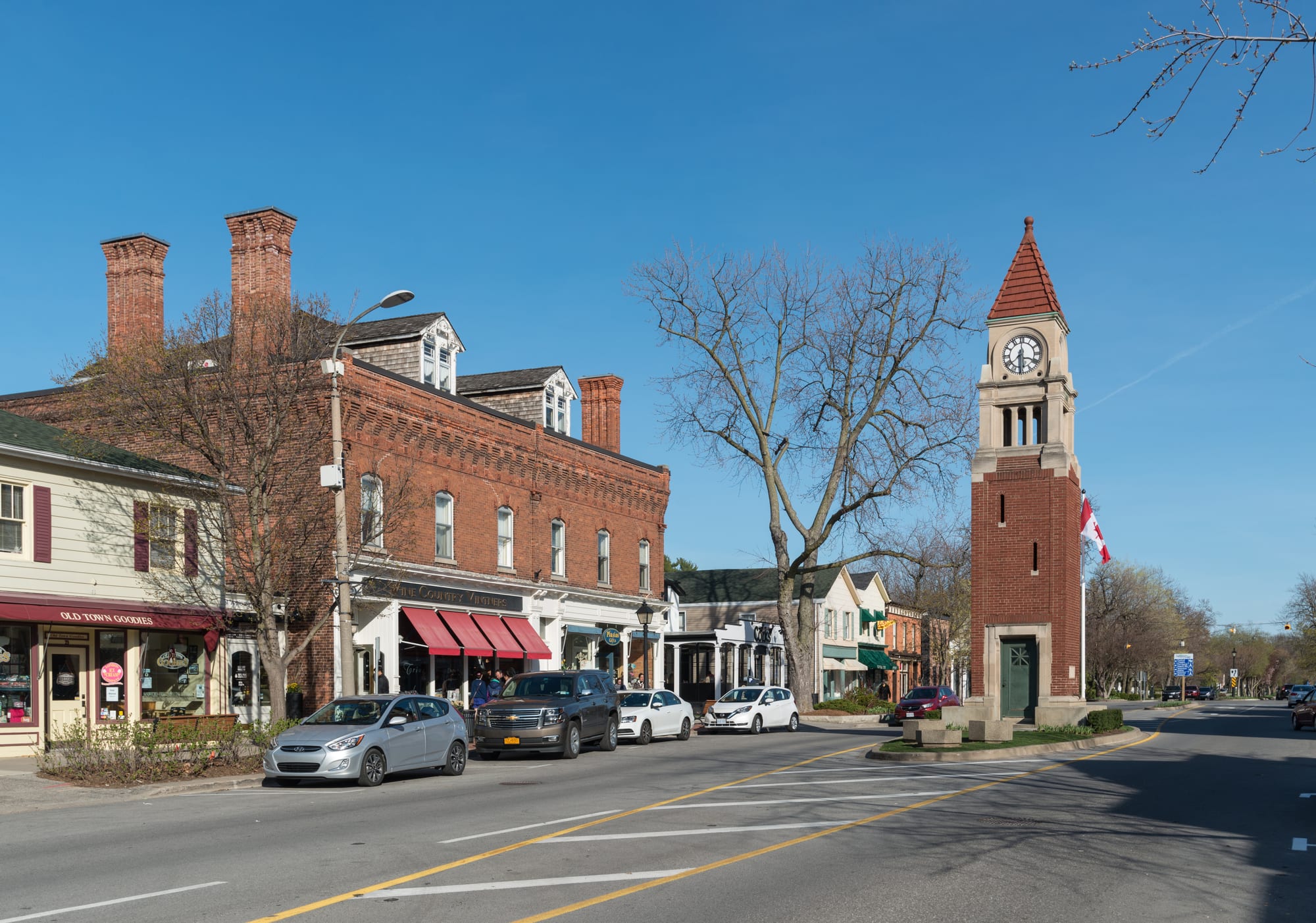
The old town is small, flat and pleasant on foot: Queen Street's shops, the theatres, the Court House, the waterfront and Fort George are within a short walk of one another. The rest of the municipality — Virgil, Queenston and the wineries — is rural and needs a car or bicycle.
🛡️ Safety
Canada is a safe country with low levels of violent crime. Niagara-on-the-Lake is a quiet town; the main risks are road traffic on rural roads shared by cars, cyclists and farm vehicles, the fast water of the Niagara River, and the steep edges of the gorge near Queenston.
Keep to marked viewpoints along the Niagara Gorge, and never drink and drive after winery visits. Check current official travel advice before travelling.
🌦️ Climate
A humid continental climate made mild by Lake Ontario: the long shoreline gives more moderate temperatures than neighbouring cities and delays the seasons, and snowfall, about 92 centimetres a year, is among the lowest in Ontario.
- Summer
- warm and humid; summer days across southern Ontario reach about 24–30°C, and the lake moderates the town's temperatures
- Winter
- cold, though moderated by the lake (in neighbouring Niagara Falls, January averages a high of about 0°C and a low of about -8°C), with one of the lowest snowfall totals in Ontario
🤝 Local Customs
Tipping of 15–20 per cent is expected in restaurants, and sales tax is added at the till. The town is proud of its heritage: the historic centre is a protected district, and residents value its quiet streets. The municipality is the only town in Canada with a lord mayor.
Be quiet in the residential streets of the old town at night, and arrive in good time for theatre performances.
💳 Common Payment Methods
The currency is the Canadian dollar. Cards and contactless payment are accepted almost everywhere, including at wineries; cash is rarely needed, and cash totals are rounded to the nearest five cents.