💰 Budget
The Gilis are more expensive than mainland Lombok because almost everything arrives by boat. Trawangan has the widest range, from dormitories to expensive villas; Meno is small and mostly mid-range; Air sits between them. Diving courses, boat transfers and drinks are the costs that add up fastest, and beachfront restaurants charge several times warung prices.
- Daily Budget Midrange
- USD 55–140 (beachfront bungalow or small resort, restaurant meals, fast boat transfers, dives)
- Daily Budget Shoestring
- USD 20–40 (dorm or simple fan bungalow, night-market meals, snorkel hire, public boat)
Bring enough cash for the whole stay if possible: island ATMs are few, charge high fees and can be empty for days, and many small places do not take cards.
📅 Best Time to Visit
May to September is the dry season, with the calmest crossings and the best underwater visibility; July and August are crowded and prices rise. The wet season from November to March brings afternoon storms, rougher seas and cancelled boats, but quiet beaches and lower rates. Ramadan is a subdued time in the villages.
⏳ Suggested Number of Days
Two or three days are enough to settle on one island and get in the water more than once. Four to six allow a stay on more than one island or a diving course. Divers and anyone adding mainland Lombok should plan for longer.
- First Visit
- 2–3 days
- With Surroundings
- 4–6 days
🚆 Transportation
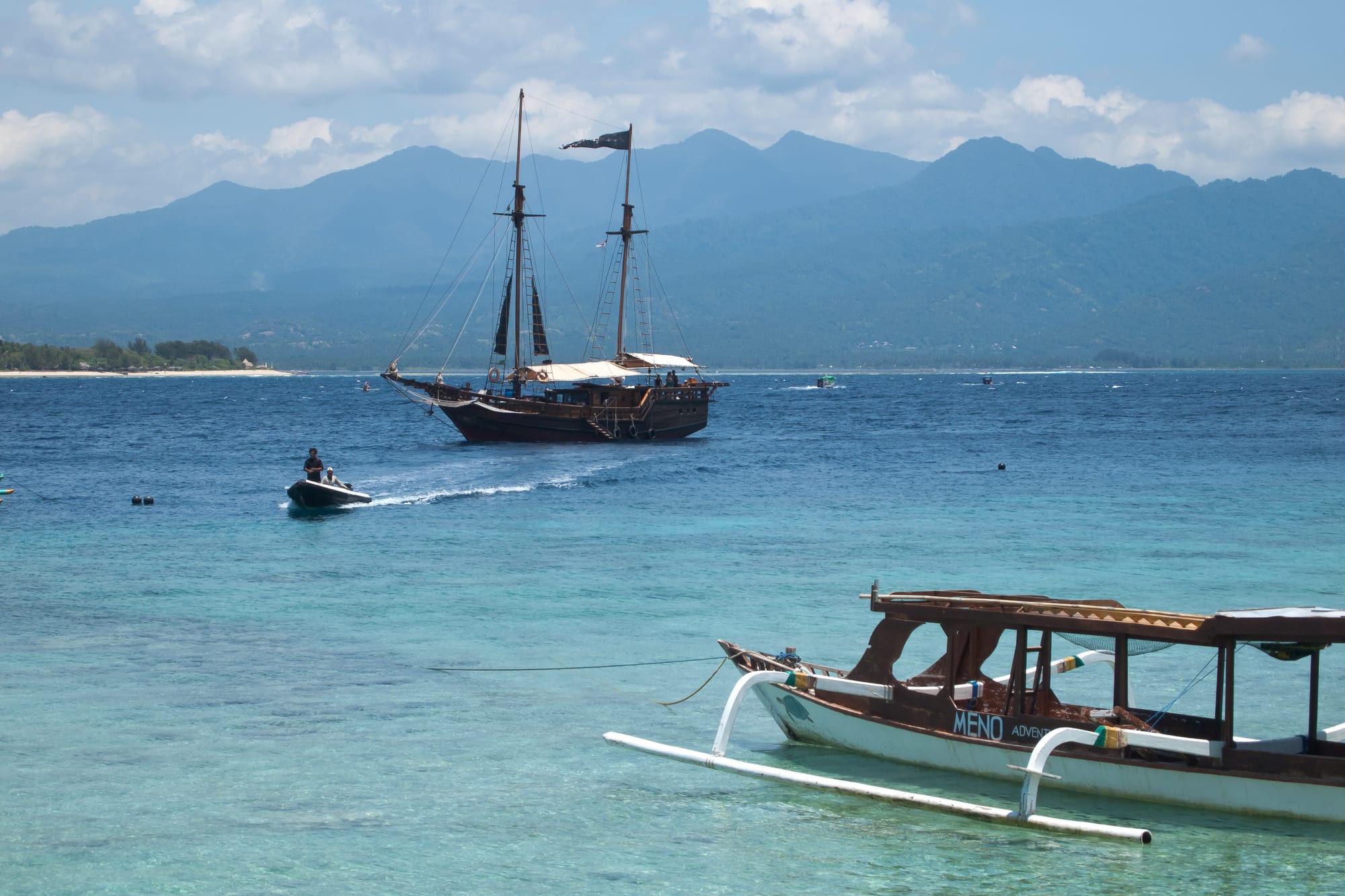
There are no cars or motorcycles on the islands. People walk, cycle on sandy tracks, or ride in a cidomo, the small pony cart used for luggage and goods. Trawangan can be circled by bicycle in about two hours, Meno and Air in less. Local boats hop between the three islands on fixed morning and afternoon runs, and charters can be arranged at the jetties.
Bicycle tracks turn to soft sand on the far sides of the islands, and there are no lights at night, so a torch is useful for walking back from dinner.
🛬 Airport & Station Connections
Fast boats cross daily from Bali — Padangbai, Serangan and Amed — in about one and a half to two and a half hours, and local boats run from Bangsal harbour on Lombok in about 20 to 30 minutes. Lombok International Airport is about two hours away by road from Bangsal. Crossings are cancelled in rough weather, and fast boats are best avoided when the sea is up.
🚶 Walkability
Everything on the islands is walkable. A flat sandy track circles each one — about seven kilometres around Trawangan, less around Meno and Air — and the main strips are a few minutes end to end. Surfaces are sand rather than pavement, awkward for wheeled luggage and unlit after dark, and midday heat makes shade scarce on the open stretches.
🛡️ Safety
The islands are calm, with little crime beyond occasional theft from bungalows and beaches. The real risks are in the water — strong currents between the islands, boat traffic and diving accidents — and in the bars, where drink-spiking and drinks made with illicit spirits have caused deaths in the wider region. There is no hospital: a clinic handles minor problems and serious cases go to Lombok or Bali. Lombok suffered deadly earthquakes in 2018, which damaged buildings on the Gilis.
Snorkel with a guide or a boat where currents run between the islands, buy drinks only from established bars, and note where the island's emergency assembly points are. Wear a helmet and only ride a scooter if experienced, avoid cheap cocktails and home-brewed spirits, dress modestly outside Bali and beach resorts, and heed volcano exclusion zones and tsunami warnings. Check current official travel advice before travelling.
🌦️ Climate
Tropical and drier than Bali, with a marked dry season and a wet season of short, heavy downpours. Sea temperatures stay warm all year, and the breeze off the strait makes the islands feel cooler than their temperatures suggest.
- Summer
- the dry season, April–October: hot and sunny, around 30–33°C, with calm mornings and reliable boats
- Winter
- the wet season, November–March: humid and about 29–31°C, with afternoon storms, rougher crossings and occasional debris on the beaches
🤝 Local Customs
The permanent population is Sasak and Bugis and mostly Muslim, and the villages behind the beach strips are conservative even where the seafront is not. Swimwear is for the beach; a shirt and shorts or a sarong are expected in the village lanes and shops. Mosques call to prayer before dawn. Alcohol is sold openly on the tourist strips but drinking away from them is out of place.
Cover shoulders and knees when walking through the villages, ask before photographing residents, and keep noise down during Ramadan, when the islands are much quieter.
💳 Common Payment Methods
The currency is the Indonesian rupiah. Dive centres, hotels and larger restaurants take cards, often with a surcharge, but warungs, boat tickets, cidomo rides and the night market are cash. The islands have only a handful of ATMs, they charge high fees and they run out, so cash brought from Bali or Lombok is the safest plan.