💰 Budget
Kuta is the cheapest part of the southern coast and the reason many travellers start here: guesthouses in the lanes, warung meals and board hire cost little. Prices climb steeply northwards through Legian to Seminyak, and beachfront clubs charge several times warung prices for the same beer. Surf lessons, spa treatments and airport transfers are the other regular costs.
- Daily Budget Midrange
- USD 55–140 (hotel, restaurant meals, drinks out, a driver for the day)
- Daily Budget Shoestring
- USD 20–35 (guesthouse or hostel, warung meals, scooter hire, board rental)
Check any local tourist charges for foreign visitors before arriving, and agree taxi fares or use a metered or app-based car rather than accepting a street quote.
📅 Best Time to Visit
The dry season from April to October brings reliable sun and the cleanest beaches, with July, August and Christmas the most crowded and expensive. The wet months from November to March are humid, with afternoon storms and debris washed onto the sand by currents, but far lower prices. Surf on this coast is generally best in the dry season.
⏳ Suggested Number of Days
A day or two covers the beach and the lanes for most visitors, and many use Kuta only at the start or end of a trip because of the airport. Three or four days make sense for anyone learning to surf or using the resort as a base for the southern coast.
- First Visit
- 1–2 days
- With Surroundings
- 3–4 days
🚆 Transportation
The resort is small enough to walk, though the one-way system and constant traffic make it slow. Scooters are the local default, and app-based car and motorbike taxis work here, with some areas restricted by local transport cooperatives. Metered taxis are common. Hotels and agents arrange cars with drivers for the day, which is how most people reach the rest of the island.
An international driving permit with a motorcycle endorsement is needed to ride legally, and helmets are compulsory and checked.
🛬 Airport & Station Connections
Ngurah Rai International Airport sits immediately south of the resort, about 3 kilometres from the beach strip and often less than fifteen minutes away outside peak traffic. The toll road across Benoa Bay links the airport with Nusa Dua and Sanur, and fast boats to Lombok and the Gili islands leave from ports on the east coast, reached by road.
🚶 Walkability
Everything in the resort is within walking distance, and the beach itself makes a continuous path north to Legian and Seminyak. Pavements are narrow, broken and often blocked by parked scooters, crossings are scarce and traffic is heavy, so walking along the main roads is unpleasant even where it is short. The lanes behind the beach are easier.
🛡️ Safety
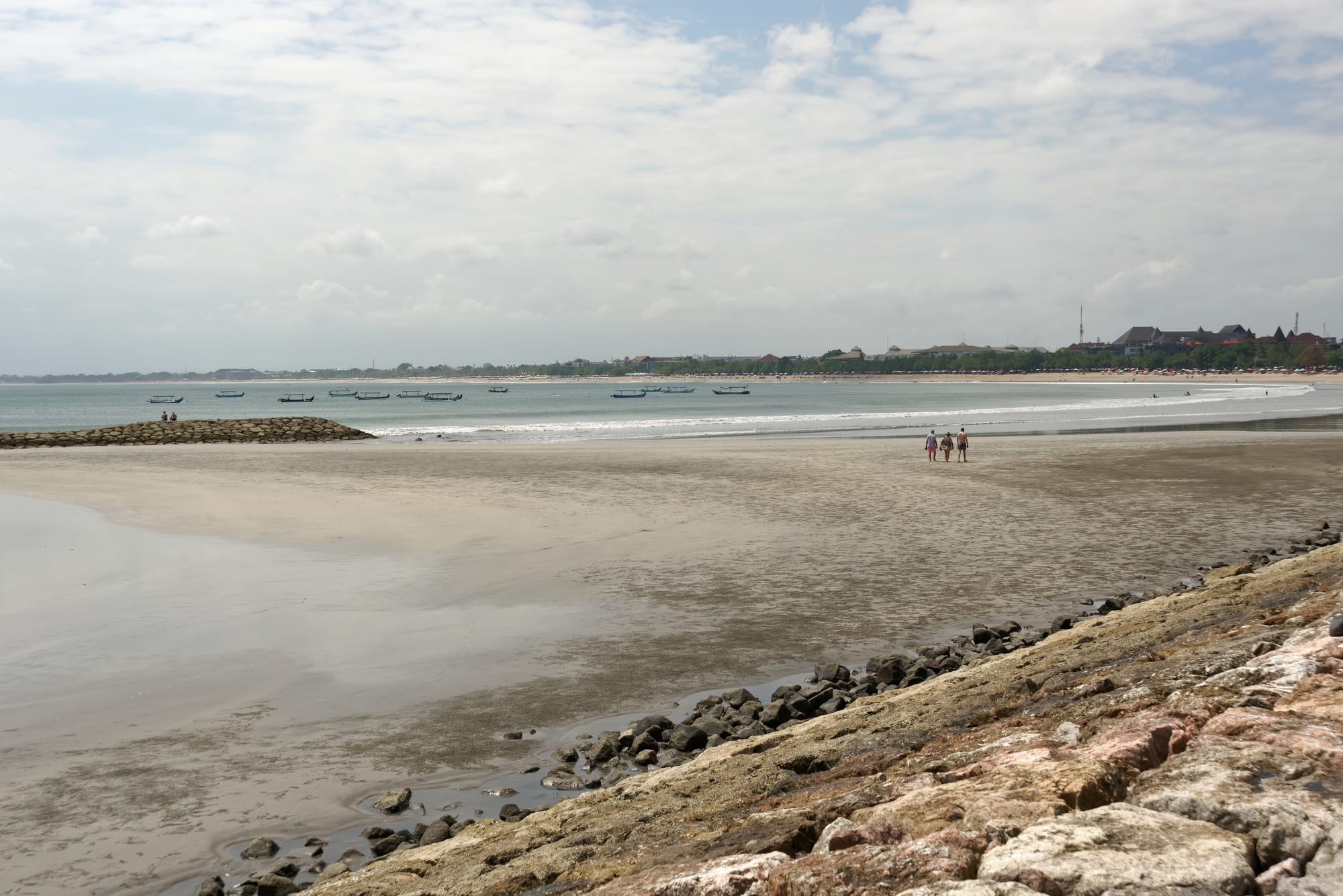
The main dangers are in the water and on the road. Kuta's beach has strong rip currents and a shore break; lifeguards patrol and swimmers should stay between the flags. Scooter accidents injure many visitors every year. Bag-snatching from motorbikes, drink-spiking and drinks made with methanol-tainted spirits are known problems in the nightlife area, and drug offences carry severe penalties, including death.
Swim between the flags, keep bags on the inland side of the pavement, and buy drinks only from established bars. Wear a helmet and only ride a scooter if experienced, avoid cheap cocktails and home-brewed spirits, dress modestly outside Bali and beach resorts, and heed volcano exclusion zones and tsunami warnings. Check current official travel advice before travelling.
🌦️ Climate
Tropical and hot all year at sea level, with humidity the main variable. The dry season runs from about April to October with steady sea breezes, and the wet season from November to March brings heavy afternoon downpours, higher humidity and warmer sea temperatures.
- Summer
- the dry season, April–October: about 27–32°C by day, lower humidity and long sunny spells
- Winter
- the wet season, November–March: about 26–32°C, humid, with storms and rougher, dirtier water
🤝 Local Customs
Kuta is used to holidaymakers, but it sits in a Hindu village with temples and ceremonies of its own. Offerings on pavements should be stepped around. Beachwear belongs on the beach: shirts and covered shoulders are expected in shops, restaurants away from the sand and above all at temples, where a sarong and sash are required. The provincial government has published rules of conduct for visitors covering dress, behaviour at sacred sites and riding without a licence.
Cover up away from the beach, never climb on or pose disrespectfully at shrines and temples, use the right hand to give and receive, and expect ceremonies to close roads without notice.
💳 Common Payment Methods
The currency is the Indonesian rupiah. Cards are widely accepted in hotels, larger restaurants and shops, while warungs, markets, drivers and beach vendors want cash. ATMs are everywhere; prefer those inside bank branches or hotel lobbies, and be wary of money changers offering unusually good rates, which is a long-running scam on this strip.