💰 Budget
The town itself is cheap for food and simple rooms, but Komodo is not: a park fee, a licensed ranger and a boat are all needed, and prices rise sharply for private charters, liveaboards and diving. Flights to Flores and resort rooms on the north coast are the other big costs, and building demand has pushed accommodation prices above the rest of the region.
- Daily Budget Midrange
- USD 55–140 (hotel with a bay view, restaurant meals, a Komodo day trip or diving, airport transfers)
- Daily Budget Shoestring
- USD 25–45 (guesthouse room, warung meals, a seat on a shared day boat, scooter hire)
Compare boat operators on safety equipment, crew size and insurance rather than price alone, and budget separately for the national park entrance fee and ranger charges.
📅 Best Time to Visit
April to October, the dry season, when the sea is calm, visibility is good and boats run reliably; the hills are brown and the heat is strong. July and August are the busiest. The wet season from November to March brings green hills, storms, rougher crossings and cancelled trips, with fewer boats running.
⏳ Suggested Number of Days
Three or four days suit a visit built around the national park and the reefs, allowing for a weather day. Five to seven make sense for divers, for a liveaboard, or for anyone continuing east along the Trans-Flores road.
- First Visit
- 3–4 days
- With Surroundings
- 5–7 days
🚆 Transportation
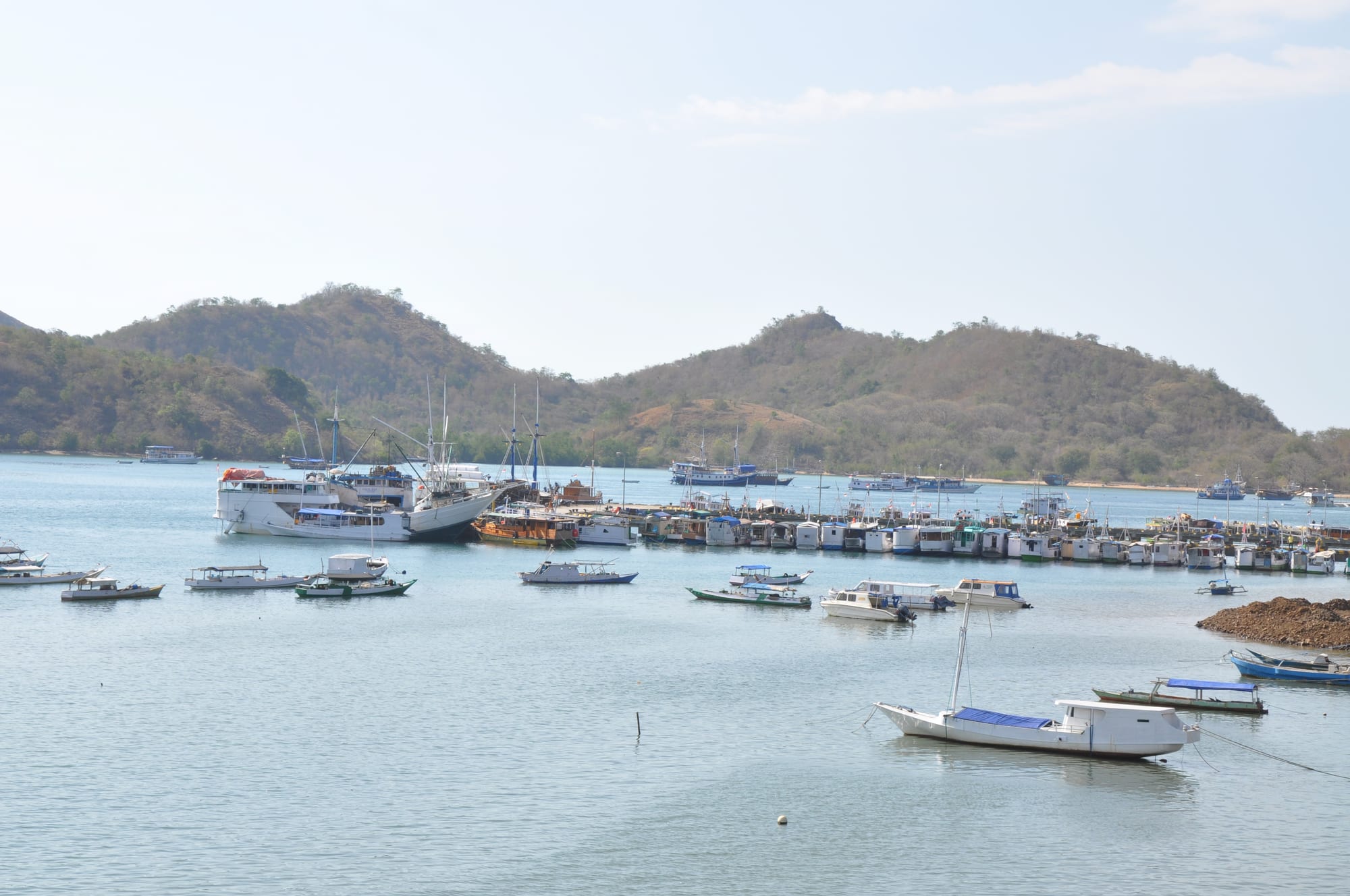
The town is small enough to walk, and everything else is done by boat. Scooters and cars with drivers are widely hired for the airport, the north coast beaches and trips inland; there are no formal buses within the town, though shared minibuses and ojek motorcycle taxis serve the villages. Boats to the park leave from the harbour and the marina each morning.
Confirm what a boat trip includes before paying — park fees, ranger charges, equipment and meals are often separate — and allow a spare day before onward flights in case the sea is rough.
🛬 Airport & Station Connections
Komodo International Airport is about three kilometres from the centre, a few minutes by road, with flights from Bali, Jakarta and Surabaya and international connections to Singapore and Kuala Lumpur. Ferries link the port with Sumbawa and other towns, and the Trans-Flores road runs east to Ruteng, Bajawa, Ende and Maumere, taking several days end to end. Liveaboard boats also run to and from Lombok.
🚶 Walkability
The centre is one long waterfront street and the lanes climbing behind it, walkable end to end in about half an hour. Pavements are patchy, traffic is constant on the main road, and the hillside is steep in the heat. Anything beyond the centre — the north coast beaches, the airport, the cave — needs transport.
🛡️ Safety
The town is generally safe, with petty theft the main crime. The significant risks are at sea: boats of variable standard, long crossings, strong currents and occasional accidents on the run to the park. On land, scooter crashes and the steep, dark streets at night are the usual problems, and medical facilities are limited, with serious cases flown to Bali. Komodo dragons are dangerous wild animals and are approached only with a ranger.
Check for life jackets and radios before boarding a boat, follow ranger instructions at all times in the national park, and carry cash and water on day trips. Wear a helmet and only ride a scooter if experienced, avoid cheap cocktails and home-brewed spirits, dress modestly outside Bali and beach resorts, and heed volcano exclusion zones and tsunami warnings. Check current official travel advice before travelling.
🌦️ Climate
Tropical savannah: hotter and much drier than Bali, with a long dry season that leaves the hills bare and brown, and a shorter wet season of heavy storms. Sea breezes make the harbour bearable in the afternoon heat.
- Summer
- the dry season, April–October: hot and sunny, around 31–34°C, with dry hills and calm seas
- Winter
- the wet season, November–March: humid and about 29–32°C, with heavy rain, green hills and rougher crossings
🤝 Local Customs
Western Flores is largely Catholic, with a substantial Muslim community of Bugis and Bajau descent around the harbour, so churches and mosques stand close together and Sunday mornings are quiet. Manggarai custom, adat, remains strong in the villages inland. Dress is more modest than in Bali: swimwear belongs on the boat and the beach, not in town.
Cover shoulders and knees in churches, mosques and villages, ask before photographing people or ceremonies, and accept coffee when it is offered in a village house.
💳 Common Payment Methods
The currency is the Indonesian rupiah. Hotels, dive centres and larger restaurants take cards; warungs, markets, drivers and most boat crews do not. There are ATMs in the town, but they can be out of cash at weekends and in the high season, and the national park fee and ranger charges are easier to settle with cash in hand.