💰 Budget
Cuenca is much cheaper than Madrid or Toledo for rooms and meals, and most of its pleasures — the gorges, the bridges and the old town's views — cost nothing. Museums and the cathedral charge modest entry fees.
- Daily Budget Midrange
- USD 120–220 (hotel in the old town, restaurant dinners, museum and cathedral entry)
- Daily Budget Shoestring
- USD 55–90 (hostel or simple pension, menú del día, city buses)
Stay a night in the old town to see the gorges at dusk once the day visitors have gone.
📅 Best Time to Visit
Spring and autumn are the best seasons for walking the gorges. Holy Week, with Las Turbas and the Religious Music Week, is the most famous time to come and needs planning; the San Mateo festivities fill the city in September. Summer days are hot and the nights much cooler; winters are mild.
⏳ Suggested Number of Days
One full day covers the old town, but a night or two allows the gorge walks and the quieter evenings. Add a day for the rock formations and hill country around the city.
- First Visit
- 1–2 days
- With Surroundings
- 2–3 days
🚆 Transportation
City buses run from the new town up to the old town and connect the high-speed station with the centre. The old town itself is best seen on foot; driving and parking on the narrow ridge are difficult, and visitors usually leave cars lower down. A car is the easiest way to reach the countryside around the city.
Use the bus for the climb up to the old town and walk down.
🛬 Airport & Station Connections
High-speed trains on the Madrid–Valencia line, opened in 2010, stop at Cuenca–Fernando Zóbel station, about 5 km from the centre and linked to it by city bus. The old conventional line through the centre closed in 2022. The nearest major airport is Madrid–Barajas, reached via Madrid by train or road.
🚶 Walkability
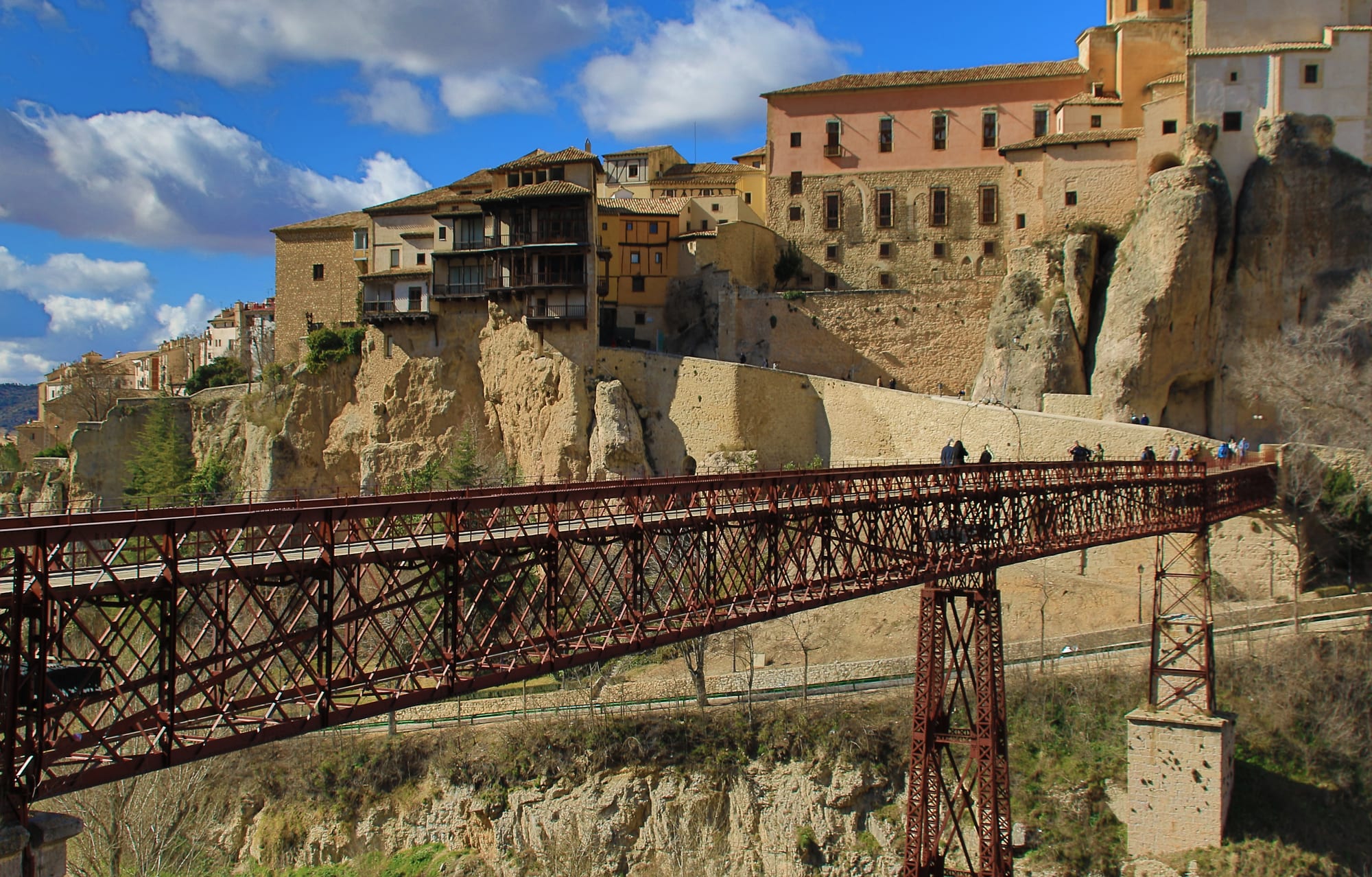
The old town is small but steep, with stairs, sloping lanes and cobbles, and a long climb from the new town. Paths and viewpoints run along both gorges, and the San Pablo bridge crosses the Huécar on foot. The new town is flat and easy to walk.
🛡️ Safety
Spain is a safe country with low violent crime. The significant risk is pickpocketing and bag-snatching, which is persistent in tourist areas of Barcelona, Madrid, and Seville, on the metro, and at crowded sights. Summer heat and, increasingly, wildfires are seasonal hazards. Cuenca is a quiet provincial city; the main care needed is on steep, uneven paths around the gorges.
Keep to marked paths and railings along the cliff edges, and wear shoes with good grip. Check current official travel advice before travelling.
🌦️ Climate
At about 950 metres, Cuenca has a Mediterranean climate made more continental by its altitude and distance from the sea, with a wide difference between day and night temperatures, a dry summer and rain mainly in autumn or in storms.
- Summer
- hot days and much cooler nights; the record high is 39.7°C, set in August 2012
- Winter
- mild, though the record low is −17.8°C, set in January 1971
🤝 Local Customs
Cuenca is a traditional, Catholic provincial city, and Holy Week is taken very seriously by its brotherhoods. Lunch is the main meal of the day. Tipping is neither mandatory nor considered customary in Spain.
Watch processions quietly and do not cross through them; cover shoulders in churches.
💳 Common Payment Methods
The currency is the euro. Credit and debit cards are widely accepted, though shops may ask for photo ID.