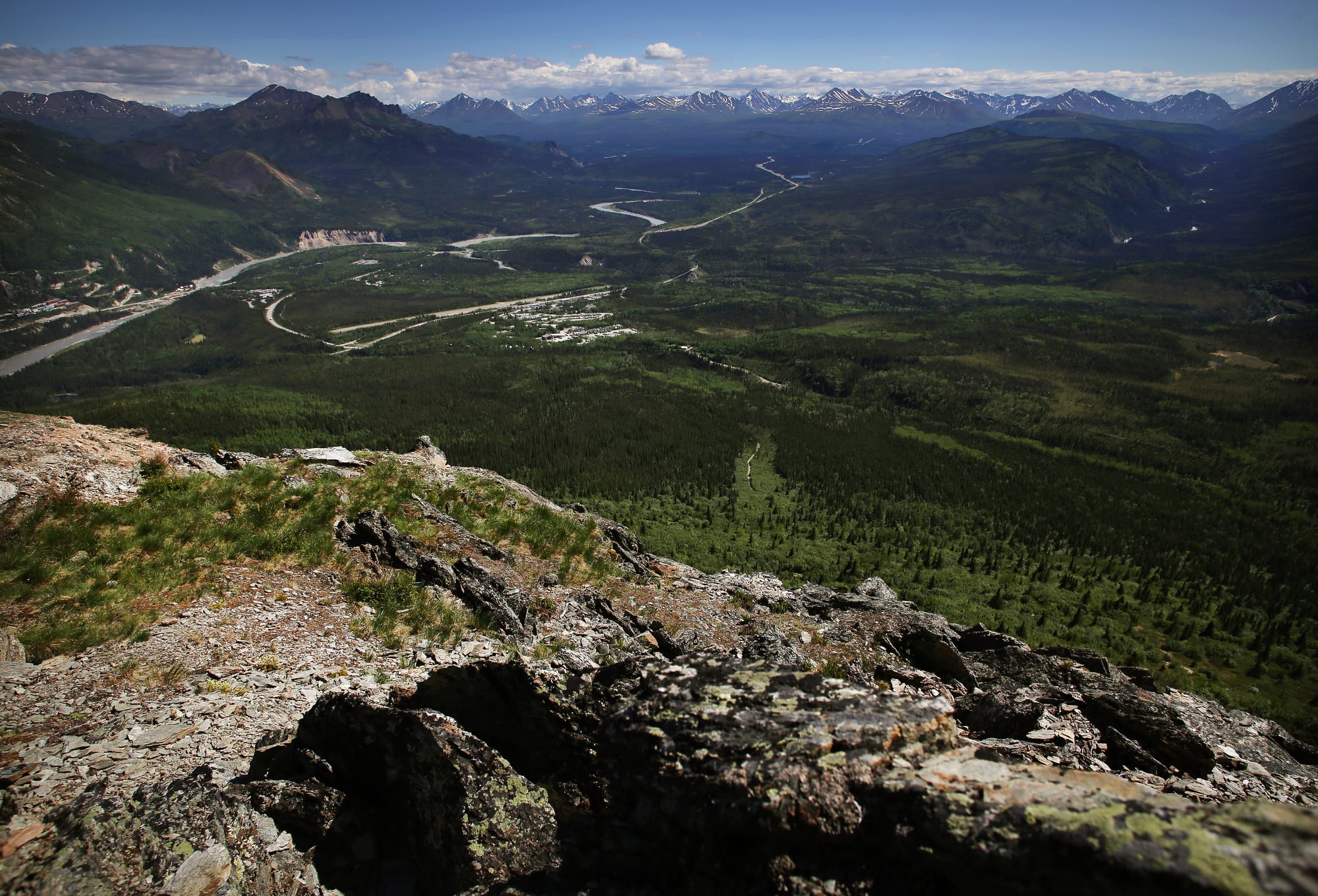
A forested green valley with a winding river and highway, seen from a rocky ridge, with snow-streaked mountains on the horizon

Alaska, United States

Denali Park

The Nenana River, the Parks Highway and the entrance to Denali National Park from the Mount Healy Overlook Trail. (NPS Photo / Emily Mesner / Wikimedia Commons · Public domain)

A tiny settlement in the Nenana River valley at the entrance to Denali National Park, on the Parks Highway and the Alaska Railroad between Anchorage and Fairbanks. Known as McKinley Park until 2015, it had only 163 residents at the 2020 census but fills each summer with visitors heading into the park on its buses.

Neighbourhoods

  • Park entrance
    • First-time visitors
    • Close to the park buses

    The first miles of the park road, just west of the highway, with the Denali Visitor Center, the bus depot, the railway station, campgrounds and the park headquarters with its sled dog kennels. Trails start from the visitor centre.

    Open in Maps
  • Parks Highway strip
    • Places to stay
    • Best for food

    The seasonal cluster of hotels, cabins, restaurants and outfitters along the highway and the Nenana River just outside the park entrance, busy from late spring to early autumn and largely closed in winter.

    Open in Maps
  • Healy
    • Year-round community
    • Quieter base

    The borough seat, about 13 miles north of the park entrance, a small year-round town with places to stay and eat for visitors who prefer to stay outside the entrance area.

    Open in Maps

Things to do

At the park entrance

  • Denali Visitor Centermuseum

    The main summer visitor centre at mile 1.5 of the park road, with an exhibit hall, ranger programmes and trailheads.

    Open in Maps
  • Denali sled dog kennelsattraction

    The only sled dog kennel owned by the federal government, at park headquarters, where dogs used on park patrols since 1922 are raised and trained and give sledding demonstrations in summer.

    Open in Maps
  • Murie Science and Learning Centermuseum

    A research and education centre named after the Murie family of naturalists, which serves as the park's main visitor centre outside summer.

    Open in Maps

Trails and viewpoints

  • Mount Healytrail

    The mountain immediately north-west of park headquarters, climbed by an overlook trail with views over the Nenana River valley.

    Open in Maps
  • Savage Riverviewpoint

    At mile 15, the end of the paved road and the limit for private cars, with a short trail along the river.

    Open in Maps

Short trips into the park

  • Denali National Park and Preservepark

    Six million acres around Denali, North America's highest mountain, explored by bus along the single park road, with grizzly bears, caribou, moose and wolves among its wildlife.

    Open in Maps

Eat and drink

Long-standing places and food districts in Denali Park. Hours, ratings and directions come from your maps app, always current.

Eating near the park

  • Parks Highway restaurantsneighborhood

    Seasonal restaurants, cafés and bars along the highway outside the park entrance, open mainly in the summer months.

    Open in Maps
  • Healyneighborhood

    A handful of places to eat in the year-round town north of the park.

    Open in Maps

Experience Denali Park

History

The valleys around the park were used for thousands of years — the oldest site inside the park, on the Teklanika River, dates to about 7130 BC — and in the last five centuries the Koyukon, Tanana and Dena'ina peoples hunted and travelled here. After the conservationist Charles Sheldon proposed a park in 1906, Mount McKinley National Park was created in February 1917.

The settlement grew with the Alaska Railroad. A hotel opened at McKinley Park Station on Thanksgiving Day 1921, and in July 1923 President Warren Harding stopped there on the way to drive the golden spike that completed the railway. Sled dogs have patrolled the park since 1922. The park road, 92 miles long, was finished in 1938, but there was no road to the entrance until the Denali Highway opened in 1957, after which visitor numbers rose quickly and the park closed most of the road to private cars and introduced shuttle buses.

In 1980 the park was enlarged and renamed Denali National Park and Preserve. The settlement, counted in the census as McKinley Park from 1930, became a census-designated place the same year and took the name Denali Park after the mountain's Native name was formally restored in 2015 (the federal name was changed back to Mount McKinley in January 2025). In August 2021 the slow-moving Pretty Rocks landslide at Polychrome Pass closed the park road beyond mile 43; a bridge has been built around it, and the park plans to reopen the road in summer 2027.

Culture & Customs

Life here is defined by the park. Most people in summer are visitors, seasonal staff, bus drivers, guides and rangers, and the shared culture is an outdoor one of early bus departures, wildlife spotting and long light evenings. Park programmes, ranger talks and the sled dog demonstrations at headquarters are the main public events.

The park's history of science runs deep. The Murie family of naturalists, after whom the learning centre is named, made influential studies of Arctic ecosystems, and Adolph Murie studied Denali's wolves in the 1930s. The kennels keep alive the tradition of travel by dog team that began with the park's first patrols in 1922.

The mountain's name is a matter of identity. Alaska's Board of Geographic Names adopted Denali, the name used locally, in 1975; the park became Denali in 1980, and the settlement followed in 2015, when the federal government did the same. In January 2025 the federal name was changed back to Mount McKinley. The peak is often hidden: it is commonly said that only about 30 per cent of visitors to the park ever see it.

Daily Life

The 2020 census counted 163 people in the Denali Park census-designated place, down from 185 in 2010, spread over more than 170 square miles of the Nenana River valley. Healy, the borough seat north along the highway, had 966. The population figure says little about summer, when hotels, restaurants and outfitters reopen and seasonal workers arrive from across the country and abroad.

The economy is almost entirely tourism and the park itself, which received about 543,300 recreational visitors in 2025. The railway and the Parks Highway bring visitors from Anchorage and Fairbanks, and more than nine in ten visitors take a park bus at some point.

The year divides sharply. From May to September the entrance area runs from early morning bus departures until late in the bright evening. In winter most businesses close, the visitor centre shuts and activity moves to the Murie Science and Learning Center, while the few year-round residents face deep cold and heavy snow.

Food

Food at Denali is mainly about supplies and seasonal restaurants. Hotels and restaurants along the highway outside the park serve visitors in summer, with menus aimed at hungry hikers and bus passengers; most close for the winter.

Inside the park there is very little to buy, so visitors heading out on the buses take all the food and water they need for the day, and campers carry their food in bear-resistant containers or store it in lockers. Bus trips into the interior last many hours, with Wonder Lake a six-hour ride from the visitor centre, so a packed meal is part of most days in the park. Healy, the borough seat north of the entrance, has places to eat.

As elsewhere in interior Alaska, wild foods matter to residents who hunt, fish and gather: wild blueberries and soapberries grow on the tundra. The Nenana River, which runs past the settlement, holds king, silver and chum salmon, Arctic grayling and other fish.

Planning tools

Budget

Denali is one of the more expensive places in Alaska to stay in summer: accommodation near the park entrance is limited and seasonal, and meals are priced for visitors. Park bus tickets are the main extra cost. Camping inside the park and the shuttle buses are the cheapest way to see it.

Daily Budget Midrange
USD 300–600 (hotel or cabin near the entrance, restaurant meals, a park bus tour)
Daily Budget Shoestring
USD 120–200 (park campground, own food, transit bus into the park)

Reserve rooms and park bus seats well ahead for summer, as buses can fill several days in advance; take food and water on park buses.

Best Time to Visit

Mid-May to mid-September, when the park buses, the railway and most businesses near the entrance operate. In winter, snow closes the park road beyond headquarters from October to April, and most businesses near the entrance close.

Suggested Number of Days

Two or three days allow for a long bus trip into the park and time at the entrance. Allow more for backcountry hiking or camping, or to improve the odds of a clear view of the mountain, which is often hidden by cloud.

First Visit
2–3 days
With Surroundings
4–5 days

Transportation

Private cars may drive the park road only as far as Savage River, at mile 15. Beyond that, the interior is reached on park transit and tour buses, on foot or by bicycle. Free shuttles circulate around the entrance area. Since August 2021 a landslide at Pretty Rocks has closed the road beyond mile 43; a bridge has been built to bypass it, and the park intends to reopen the road in summer 2027.

Tell the driver if carrying bear spray on a park bus, so it can be stored safely.

Airport & Station Connections

The settlement is on the George Parks Highway, about 231 miles north of Anchorage and 128 miles south of Fairbanks, a long day's drive from Anchorage. The Alaska Railroad's Denali Star train stops at the park station near the visitor centre between mid-May and mid-September, and summer buses also run. Flights land at Anchorage or Fairbanks.

Walkability

The entrance area is spread out, but trails and free shuttles link the visitor centre, the bus depot, the railway station and the kennels. The highway strip outside the park is a short ride away and is walkable along its length.

Safety

For most visitors the US is safe, with the main risks being petty theft and car break-ins in tourist areas of some cities, road accidents over long distances, extreme weather, and the hazards of the outdoors. At Denali the outdoors is the main concern: brown bears and moose, river crossings, and weather that changes without warning, with snow possible even in July.

Keep well away from wildlife, carry bear spray when hiking, dress in layers with waterproofs, and check park alerts before heading out. Check current official travel advice before travelling.

Climate

A subarctic climate: summer days are mild and nights brisk, with June to August the rainiest months. Winters are severely cold.

Summer
mild days and cool nights — summer temperatures in the park range from about 33°F to 75°F, and snow can fall even in July
Winter
severely cold — temperatures in the park range from about -40°F or below to the high 20s °F on warm days

Local Customs

Tipping of roughly 18–22 per cent in restaurants is expected, as across the country. Dress is casual and outdoor. The mountain's name is itself a local matter: Denali is the name used locally, though the federal name reverted to Mount McKinley in 2025; the settlement dropped the name McKinley Park in 2015.

Identification is asked for when buying alcohol (the legal age is 21). Stay on durable ground and spread out when hiking off trail, to protect the tundra.

Common Payment Methods

The currency is the US dollar. Cards are widely accepted by businesses at the entrance and on the highway, and a little cash is useful.