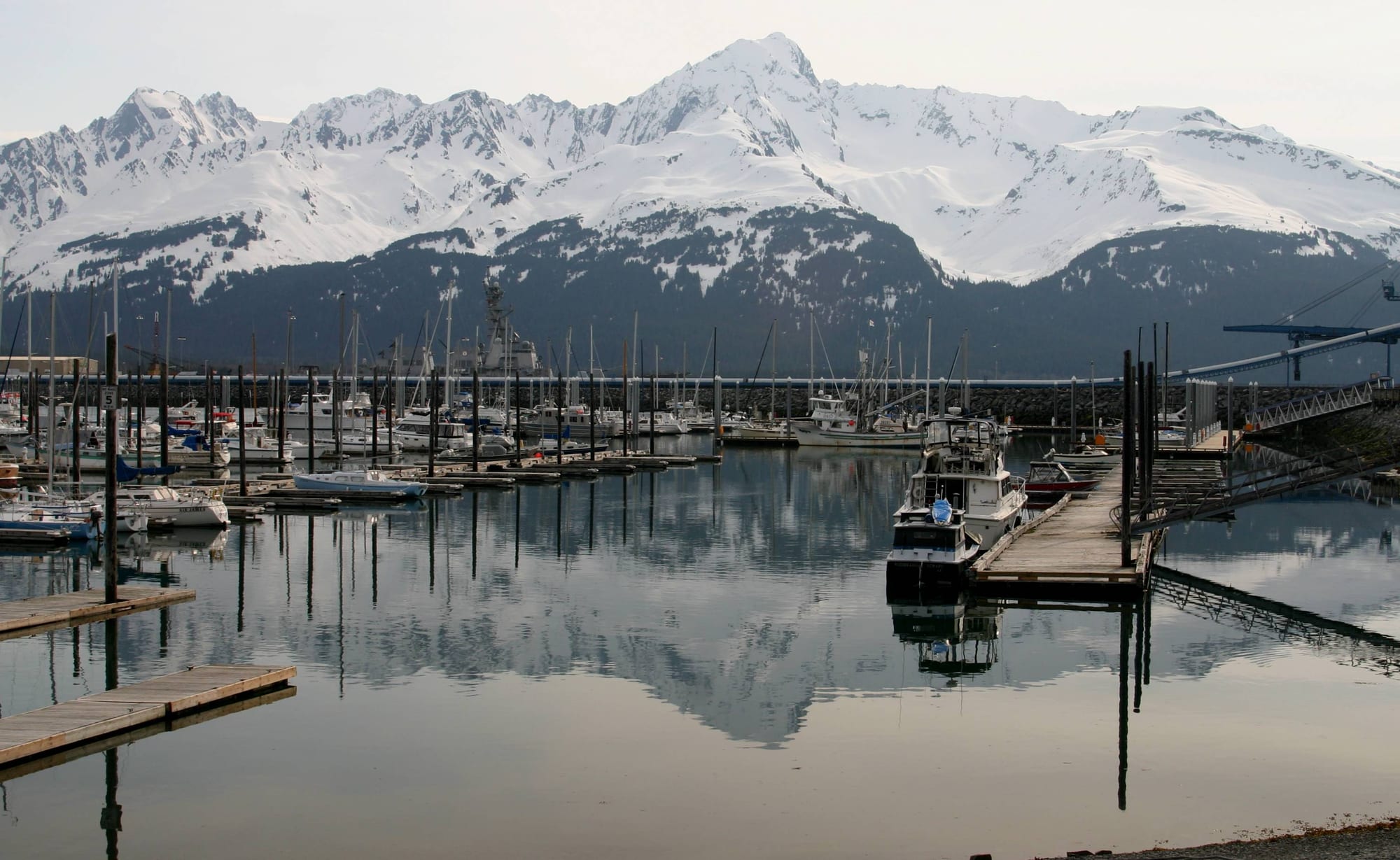
Boats in Seward's harbour reflected in still water, below mountains

Alaska, United States

Seward

The harbour at Seward on Resurrection Bay, with mountains behind. (Frank K. from Anchorage, Alaska, USA / Wikimedia Commons · CC BY 2.0)

A small port at the head of Resurrection Bay on the Kenai Peninsula, about 120 miles by road from Anchorage. The southern end of the Alaska Railroad and the historic Mile 0 of the Iditarod Trail, it lives from fishing and summer tourism, as the gateway to Kenai Fjords National Park and a turnaround port for cruise ships.

Neighbourhoods

  • Downtown
    • First-time visitors
    • Museums
    • Walkable

    The old town at the southern end of the waterfront, below the slopes of Mount Marathon, with the Alaska SeaLife Center, shops, cafés and restaurants in a few walkable blocks. Mile 0 of the Iditarod Trail is marked on the shore here.

    Open in Maps
  • Small boat harbour
    • Boat tours
    • Fishing
    • Best for food

    The harbour at the north end of town, where day cruises into Kenai Fjords, fishing charters and kayak trips leave. Restaurants, tour offices and the railway depot are close by, and a paved path follows the water to downtown.

    Open in Maps
  • Lowell Point
    • Quiet and rural
    • Coastal walks

    A small community just south of town along the bay's western shore, at the end of the road and the start of the coastal trail towards Caines Head.

    Open in Maps

Things to do

In town

  • Alaska SeaLife Centermuseum

    A public aquarium and Alaska's only permanent marine mammal rehabilitation centre, opened in 1998 on the shore of Resurrection Bay and partly paid for by Exxon Valdez oil spill settlement funds.

    Open in Maps
  • Mount Marathontrail

    The mountain that rises directly behind the town, with steep trails to views over Resurrection Bay, known above all for the race up and down it every Fourth of July.

    Open in Maps
  • Jesse Lee Home for Childrenlandmark

    The ruins of a Methodist children's home that opened in 1926 and was abandoned after damage in the 1964 earthquake.

    Open in Maps

Glaciers and the bay

  • Exit Glacierpark

    The only part of Kenai Fjords National Park reached by road, a valley glacier flowing from the Harding Icefield whose retreat has made it a well-known sign of climate change.

    Open in Maps
  • Resurrection Bayviewpoint

    The ice-free fjord at whose head Seward stands, used by day cruises, water taxis and kayakers heading for Kenai Fjords.

    Open in Maps
  • Caines Head State Recreation Areapark

    Forested coastline about 7 miles south of town, with a Second World War fort on the headland and seals and sea otters offshore.

    Open in Maps

Short trips from the town

  • Kenai Fjords National Parkpark

    The national park west of Seward, protecting the Harding Icefield and the tidewater glaciers and fjords below it, reached by boat tours from the harbour and by road at Exit Glacier.

    Open in Maps

Seasonal events

  • Mount Marathon RaceFourth of July

    A short, brutally steep race up the mountain behind town and back, first organised in 1915 and said to have begun with a bar bet between two sourdoughs.

  • Seward Silver Salmon DerbyAugust

    A fishing derby for the largest coho (silver) salmon, held since 1956 and the second-oldest in Alaska.

Eat and drink

Long-standing places and food districts in Seward. Hours, ratings and directions come from your maps app, always current.

Seward classics

  • Harbour restaurantsneighborhood

    Seafood restaurants and casual places around the small boat harbour, serving salmon, halibut and other local fish to people coming off the boats.

    Open in Maps
  • Downtown Sewardneighborhood

    Cafés, bakeries and family restaurants in the old town near the SeaLife Center.

    Open in Maps

Experience Seward

History

Resurrection Bay was home to Alutiiq and Dena'ina people long before Europeans arrived, and the town has names in both languages: Qutalleq in Alutiiq and Tl'ubugh in Dena'ina. The Russian trader Alexander Baranov named the bay after sheltering there from a storm that ended on Easter Sunday, and in 1793 he set up a fur trading post where Seward now stands, where a three-masted ship, the Phoenix, was built.

The modern town is named after William H. Seward, the Secretary of State who bought Alaska from Russia. It grew as an ice-free port at the southern end of the railway into the interior and the start of the original Iditarod Trail, whose Mile 0 is still marked on the shore, and it was incorporated in 1912. In the Second World War Seward was an important military port; Fort Raymond guarded the town and Fort McGilvray stood on Caines Head.

The 1964 earthquake hit Seward hard. Shaking and a local tsunami damaged a large part of the town, and the Jesse Lee Home for Children, a Methodist home opened in 1926, was abandoned after the damage. Kenai Fjords became a national park in 1980, the Alaska SeaLife Center opened in 1998, and in 2015 President Barack Obama visited Exit Glacier to speak about its retreat and climate change.

Culture & Customs

Seward is a working harbour town with a strong outdoor identity. Its best-known tradition is the Mount Marathon Race, run every Fourth of July since 1915: runners race up the steep mountain behind town and back down again, with separate men's, women's and juniors' races. According to local legend it began as a bar bet between two sourdoughs over whether anyone could reach the top and return in under an hour.

Fishing is the other passion. The Seward Silver Salmon Derby, held since 1956, is the second-oldest fishing derby in Alaska and runs in August, with the largest coho salmon brought in and weighed each day. Charter boats go out for salmon, halibut and lingcod through the summer.

The town takes pride in its place in Alaskan history as the railway's ocean terminus and the start of the Iditarod Trail. Benny Benson, the Alaska Native designer of what became the state flag, is one of its best-known former residents. The town was also the home port of the Coast Guard cutter Mustang until 2025.

Daily Life

The 2020 census counted 2,717 people in Seward, the fourth-largest city in the Kenai Peninsula Borough. The town is hemmed in by Resurrection Bay on one side and the steep slopes of Mount Marathon on the other, and stretches north from downtown past the harbour to the mouth of the Resurrection River; Lowell Point lies at the end of the road to the south.

Commercial fishing and seasonal tourism drive the economy. In 2016 boats landed about 13,500 tons of fish and shellfish worth about 42 million dollars, and in 2023 there were 87 cruise ship visits bringing nearly 200,000 passengers. Other large employers are the state's Spring Creek Correctional Center, the AVTEC vocational school and the local hospital. The railway corporation has signed a long-term contract with a cruise line to build a new dock and terminal, expected to open in 2026.

The year has two rhythms. From May to September the harbour is busy from early morning with tour boats, charters and trains; in winter many businesses close and the town returns to its residents.

Food

Seafood is the heart of eating in Seward. Salmon and halibut are grilled, fried or served as fish and chips in the restaurants around the small boat harbour. Sport anglers also go out for lingcod and even salmon shark. In August the Seward Silver Salmon Derby, Alaska's second-oldest fishing derby, sends anglers out on the bay after the largest coho, also known as silver salmon.

Some boat tours into the bay stop at Fox Island for a buffet dinner of salmon and prime rib on the shore, a popular way to combine a cruise with a meal. Downtown has cafés, bakeries and family restaurants, and the town's bars serve Alaskan craft beer.

As across Alaska, wild food matters to residents: many use the salmon season to put part of the household's food by, fishing for subsistence as well as sport. Commercial fishing, with seasonal tourism, still drives the town's economy.

Planning tools

Budget

Seward is expensive in high summer, when cruise passengers, anglers and park visitors compete for a limited number of rooms. Boat tours into Kenai Fjords and fishing charters are the largest costs; walking to Exit Glacier and around town is cheap.

Daily Budget Midrange
USD 300–550 (hotel, restaurant meals, a Kenai Fjords boat tour)
Daily Budget Shoestring
USD 120–200 (campground or hostel bed, supermarket food, walking and the summer shuttle)

Book rooms and fjord cruises early for July and August, and keep some flexibility, as rough seas can change boat plans.

Best Time to Visit

Late May to mid-September is the season for boat tours, wildlife and hiking. July brings the Mount Marathon Race and the busiest days; August has the silver salmon derby. Most tours stop in winter, when the town is quiet.

Suggested Number of Days

One or two days suit most visitors. Three give more time on the water and the trails, and leave room if bad weather cancels a boat tour.

First Visit
1–2 days
With Surroundings
3 days

Transportation

The town is small and flat along the waterfront, and a paved bike path runs from downtown through the harbour. In summer the city runs a shuttle bus when cruise ships are in town. A car, taxi or tour shuttle is needed for Exit Glacier; water taxis serve the bay's coves and trailheads.

Boat tours leave from the small boat harbour; allow time to walk or ride there from downtown.

Airport & Station Connections

Seward is about 120 miles by road from Anchorage on the Seward Highway, a National Scenic Byway, and the nearest airports with scheduled flights are at Anchorage and Kenai. The Alaska Railroad runs a seasonal passenger train from Anchorage, and summer buses also make the trip. Cruise ships begin and end Alaska voyages here, with passengers continuing by train or bus; a new cruise dock and terminal is planned to open in 2026. State ferries no longer call here.

Walkability

Very walkable: downtown, the waterfront path and the harbour lie along a single strip a mile or two long, with the mountain trails starting at the edge of town.

Safety

For most visitors the US is safe, with the main risks being petty theft and car break-ins in tourist areas of some cities, road accidents over long distances, extreme weather, and the hazards of the outdoors. Around Seward those hazards are the main concern: bears on the trails, cold water, rough seas and glacier ice. The Seward Highway is a long mountain road and is busy in summer.

Stay on marked trails and well back from the glacier face, carry bear spray, and dress warmly for boat trips. Check current official travel advice before travelling.

Climate

A cool maritime climate moderated by the Gulf of Alaska, milder in winter than most of the state, with cloud and rain common.

Summer
cool and often wet, moderated by the nearby Gulf of Alaska; average daily highs stay above 32°F in every month except January
Winter
relatively moderate compared with the rest of the state, thanks to the Gulf of Alaska; January is the only month with an average daily high below 32°F, and temperatures below 0°F are rare

Local Customs

Tipping of roughly 18–22 per cent in restaurants is expected, as across the country. Dress is casual and practical. The Fourth of July, with the Mount Marathon Race, is a highlight of the town's year.

Identification is asked for when buying alcohol (the legal age is 21).

Common Payment Methods

The currency is the US dollar. Cards are accepted almost everywhere, and a little cash is useful.