History
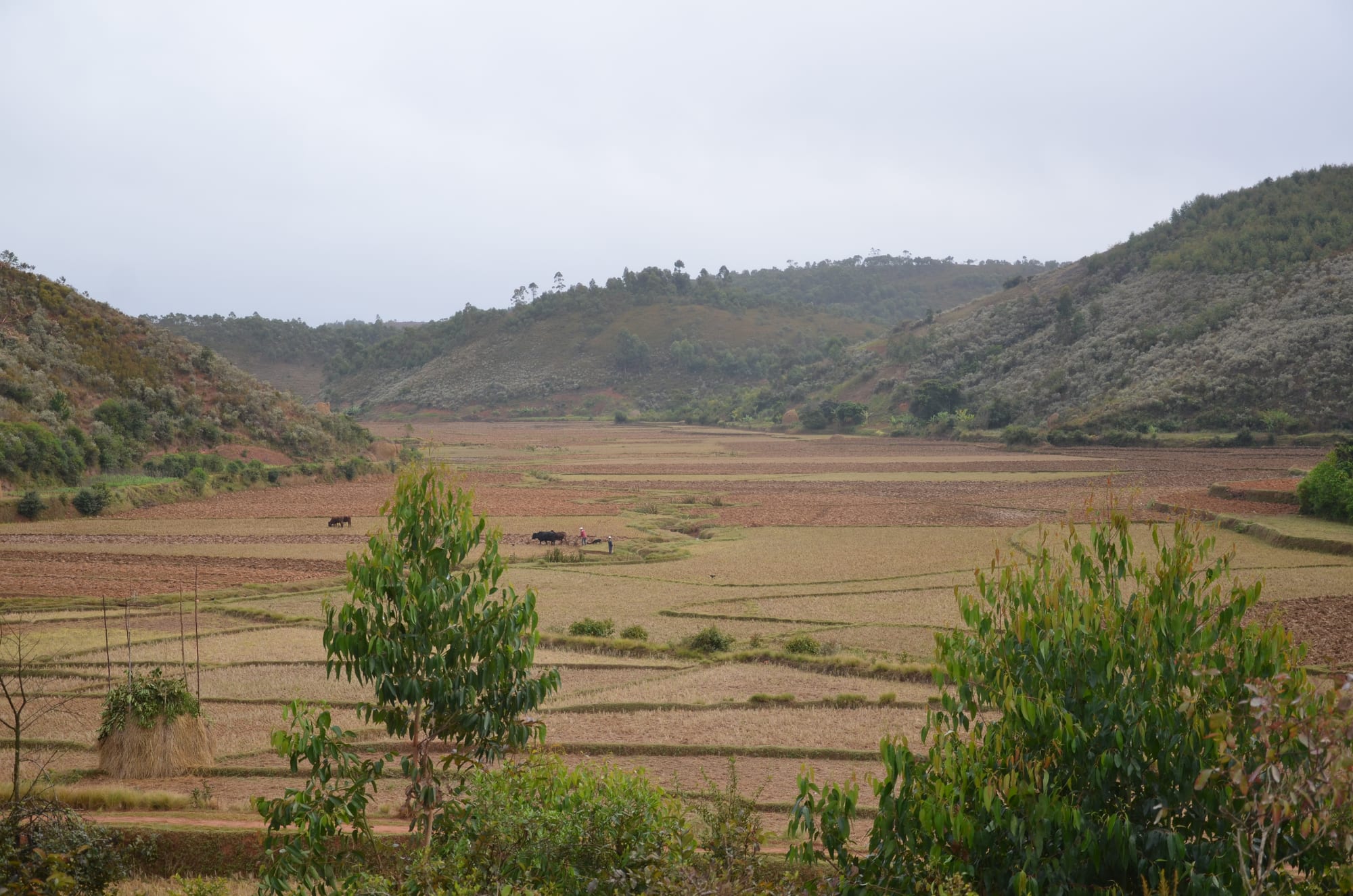
The central plateau is Imerina, the land of the Merina, whose ancestors settled the highlands and turned its marshes into rice fields over many centuries. By the 1700s Imerina was split among rival chiefdoms until Andrianampoinimerina, ruling from the fortified hill of Ambohimanga, reunited them at the end of the century and moved his capital to Antananarivo, one of the twelve sacred hills of Imerina. His son Radama I allied with Britain, welcomed missionaries of the London Missionary Society who wrote Malagasy in the Latin alphabet, and extended Merina rule over most of the island.
Ranavalona I, who succeeded him in 1828, expelled the missionaries and persecuted Malagasy Christians, yet employed the Frenchman Jean Laborde to build an industrial complex at Mantasoa. Under Ranavalona II, baptised in 1869, Protestantism became the court religion, and the prime minister Rainilaiarivony governed the kingdom for three decades while marrying three successive queens.
France took Antananarivo in 1895, abolished the monarchy in 1897 and sent Ranavalona III into exile; the Menalamba rising against the French and the converted elite was put down in the highlands. The 1947 uprising broke out mainly in the east, but its political leaders were tried in the capital. Since independence in 1960, Antananarivo has been where power changes hands: its mass protests led to the 2009 crisis that brought the city's mayor Andry Rajoelina to power, and in 2025 youth-led protests over water and power cuts culminated in a coup by the CAPSAT army unit that removed Rajoelina.