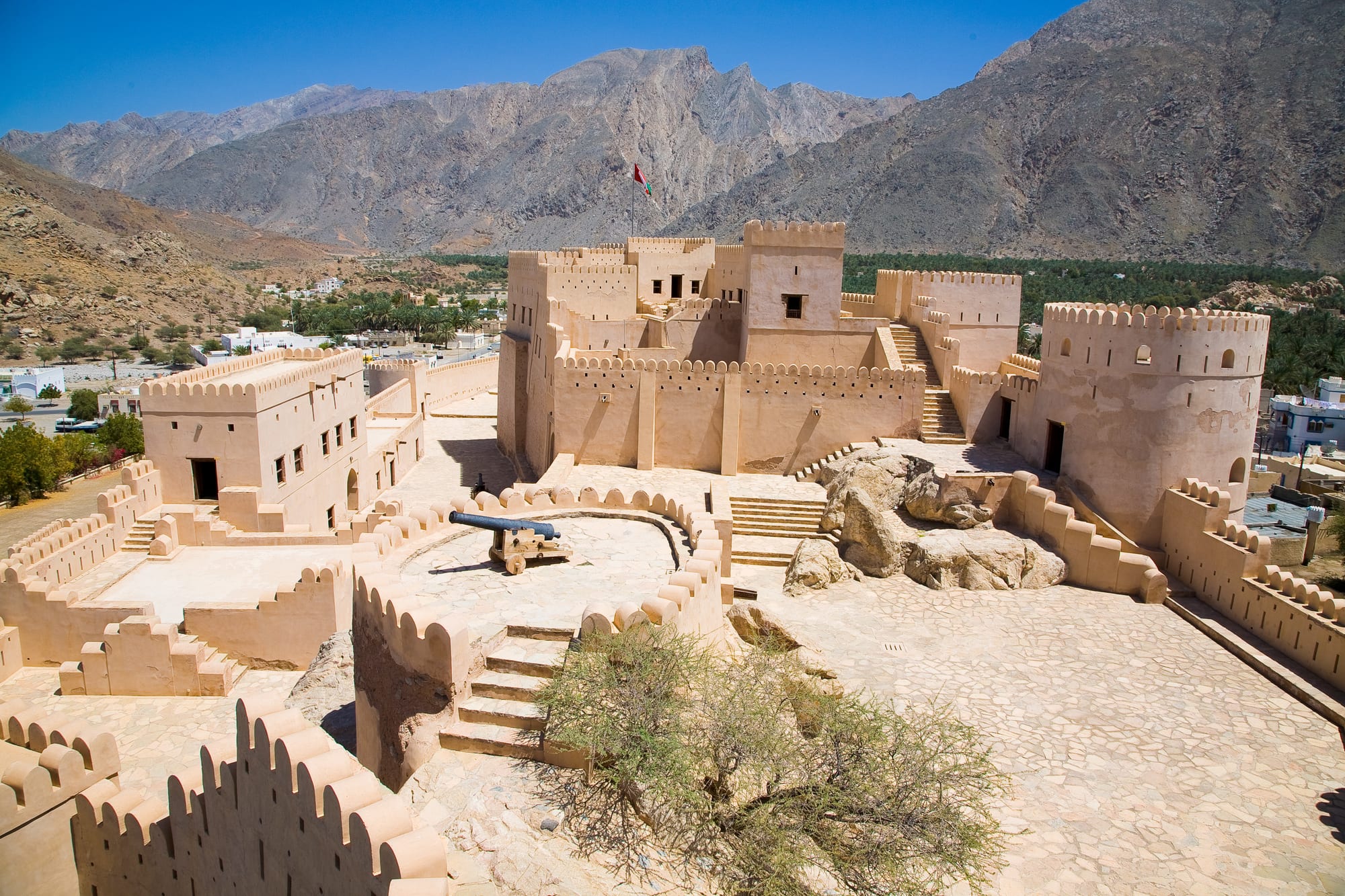
History
The Batinah coast is one of the oldest settled parts of Oman. Copper mined in the hills of northern Oman is thought to have supplied Mesopotamia in the third millennium BC, when the region was known as Magan, and falaj channels carried mountain water to date gardens along the plain. By the 10th century Sohar was one of the richest ports of the Gulf, importing spices and timber from India, and Omani tradition links it to the voyages of Sinbad.
Muscat itself was a small harbour until the Portuguese seized it in 1507. They fortified the cove with the forts of Jalali and Mirani in the late 16th century and held the coast until 1650, when the Ya'ariba imams, whose dynasty first ruled from Rustaq in the Batinah foothills, drove them out. In the 1740s Ahmad bin Said, governor of Sohar, expelled Persian forces and founded the Al Bu Said dynasty; his successors moved the capital from Rustaq to Muscat in the late 18th century, and from here the sultans ran an empire reaching Zanzibar.
After Qaboos bin Said took power in 1970 the capital spread along the coast from Seeb to Qurum, while the Batinah highway, Sohar's new port and industrial zone, and a university in Sohar transformed the north coast. Sohar was also the centre of Oman's 2011 protests over jobs and corruption.