History
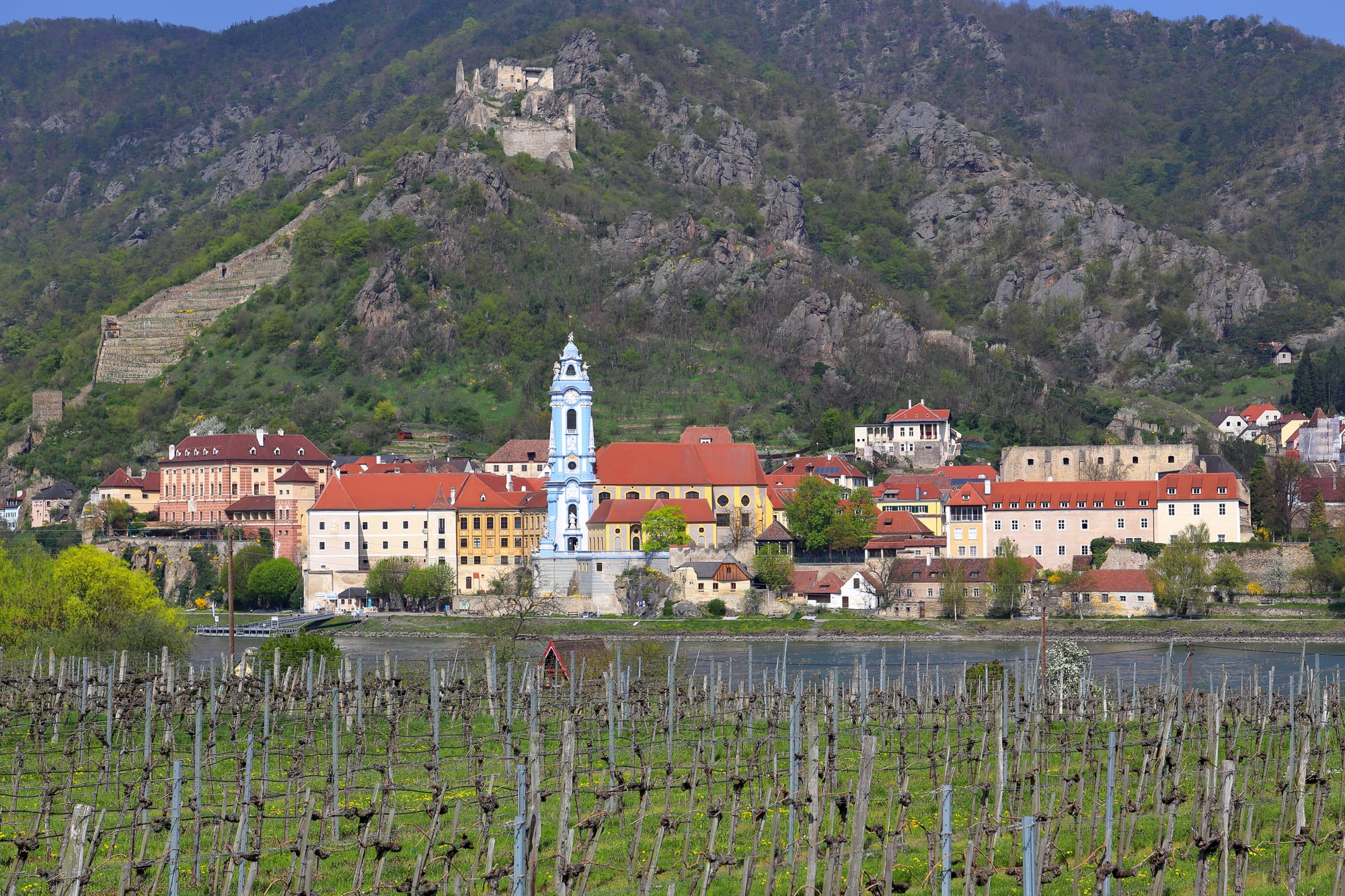
The Danube made this corner of Austria a frontier long before it was a capital. Rome fortified the river with a legionary camp at Vindobona, beneath today's Vienna, and a larger town at Carnuntum, further downstream, where Marcus Aurelius wrote part of his Meditations. The name Austria first appears in a deed of 996 for land at Neuhofen an der Ybbs. The Babenberg margraves moved their seat down the Danube by way of Tulln and, around 1155, to Vienna, and the ransom paid for Richard the Lionheart, held at Dürnstein in 1192–93, built the new town of Wiener Neustadt.
Rudolf of Habsburg won the country by defeating Ottokar of Bohemia on the Marchfeld in 1278, and Vienna was his dynasty's residence for most of the next 640 years. After the Ottoman siege of 1683 failed, court and church rebuilt in Baroque: the Belvedere, Schönbrunn, the Karlskirche, and Melk and Göttweig above the Danube. The walls came down from 1857 for the Ringstrasse, and by 1910 Vienna held over two million people. Burgenland was then the German-speaking fringe of Hungary, where the Esterházy princes employed Haydn at Eisenstadt.
The empire's fall in 1918 left Vienna an outsized capital. It became a federal state of its own at the start of 1922 and, as "Red Vienna", built more than 60,000 council flats before the civil war of February 1934. Burgenland was transferred from Hungary in 1921 without its natural capital, Sopron, which voted to stay Hungarian. After the Anschluss of 1938 Vienna's Jews, nearly a tenth of the city, were robbed, expelled or murdered, as were Burgenland's Jews and most of its Roma. The Allies occupied Vienna until 1955, and the Iron Curtain ran along the region's northern and eastern edges until 1989, when hundreds of East Germans broke through it at the Pan-European Picnic near Sopron on 19 August. Lower Austria, long governed from Vienna, chose St. Pölten as its capital in 1986.