History
The hills were long a refuge rather than a centre. The early Sinhalese kingdoms ruled from the dry plains to the north, and Uva and the south-eastern lowlands of present-day Monaragala formed part of Ruhuna, the southern principality, whose Buddhist monuments survive at Maligawila and Buduruwagala. Kandy, known to Sinhalese as Senkadagala or simply Maha Nuwara, "the great city", emerged as the capital of an independent kingdom in the late 15th century.
As the Portuguese and then the Dutch took the coasts, Kandy held out behind its forests and passes for more than three centuries, defeating Portuguese armies and trading with the Dutch while resisting them. Its kings kept the Tooth Relic, the symbol of the right to rule, in a temple beside the palace. The last dynasty, of South Indian Nayak origin, lost the support of the Kandyan nobles, and in 1815 the chiefs signed the Kandyan Convention handing the kingdom to Britain. The Uva–Wellassa rebellion of 1817–18 was crushed with great brutality.
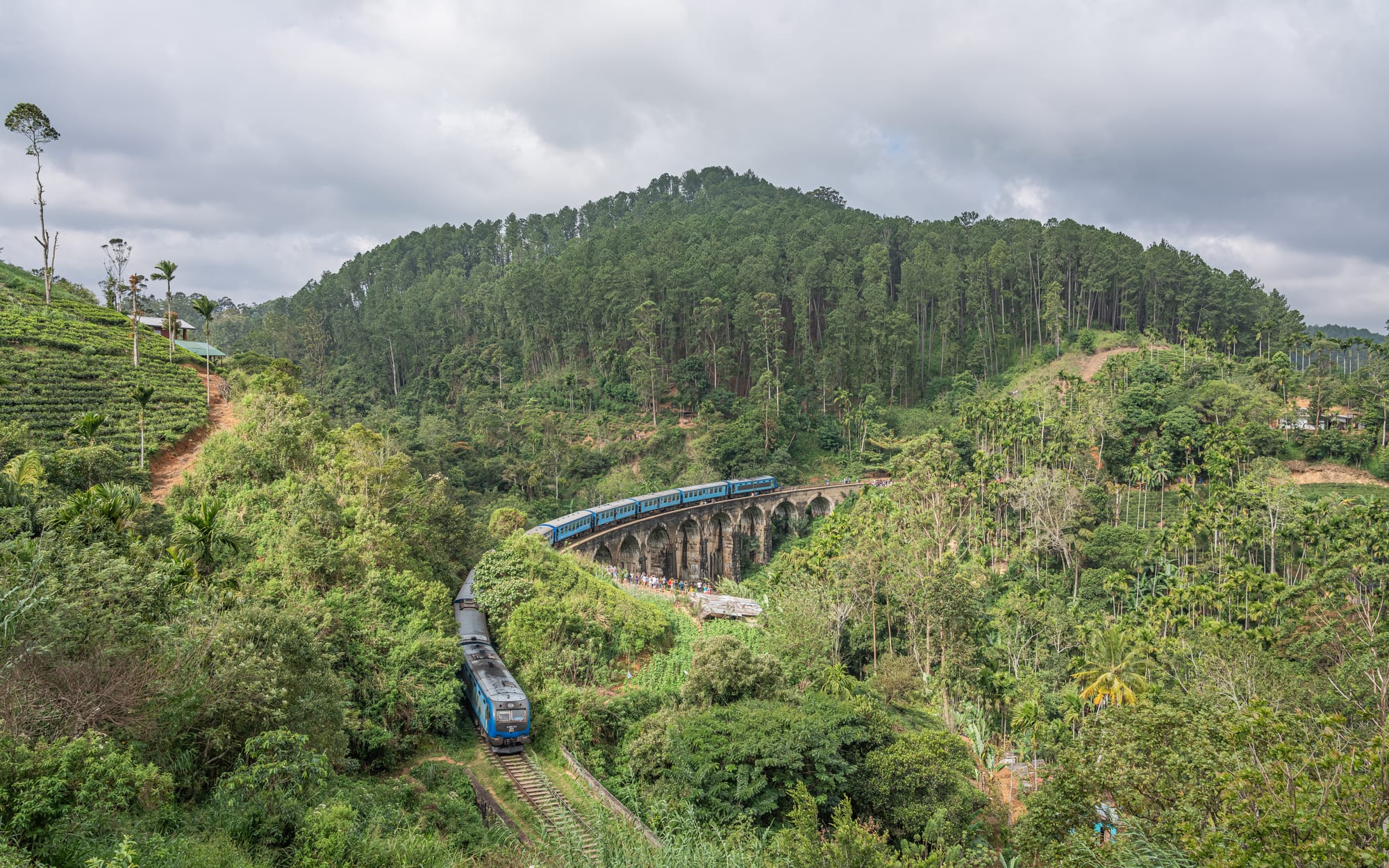
The British then remade the hills. Coffee was planted across them until a leaf disease that struck in 1869 ruined it, and tea replaced it. Hundreds of thousands of Tamil labourers were brought from South India to work the estates, and the railway climbed into the hills towards Nuwara Eliya and Badulla. After independence many of those workers' descendants were left stateless for decades. In 1998 an LTTE bomb damaged the Temple of the Tooth, which has since been restored.