History
Celtic tribes held the upper Rhône valley before the Romans took it; the Roman town of Octodurus, today's Martigny, guarded the road over the Great St Bernard Pass, whose name comes from the hospice founded in the 11th century. The abbey of Saint-Maurice, founded in 515 on the site of the martyrdom of the Theban Legion, is one of the oldest monasteries in Europe still in use.
For centuries the Valais was ruled by the prince-bishops of Sion, whose fortresses of Valère and Tourbillon still crown the city. German-speaking settlers from the north filled the upper valley in the early Middle Ages, and the German Upper Valais came to dominate the French-speaking lower valley, which it conquered from Savoy in the 15th century. The Valais was an ally of the Swiss rather than a member; Napoleon made it the French department of Simplon in 1810, and it joined the Confederation as a canton only in 1815.
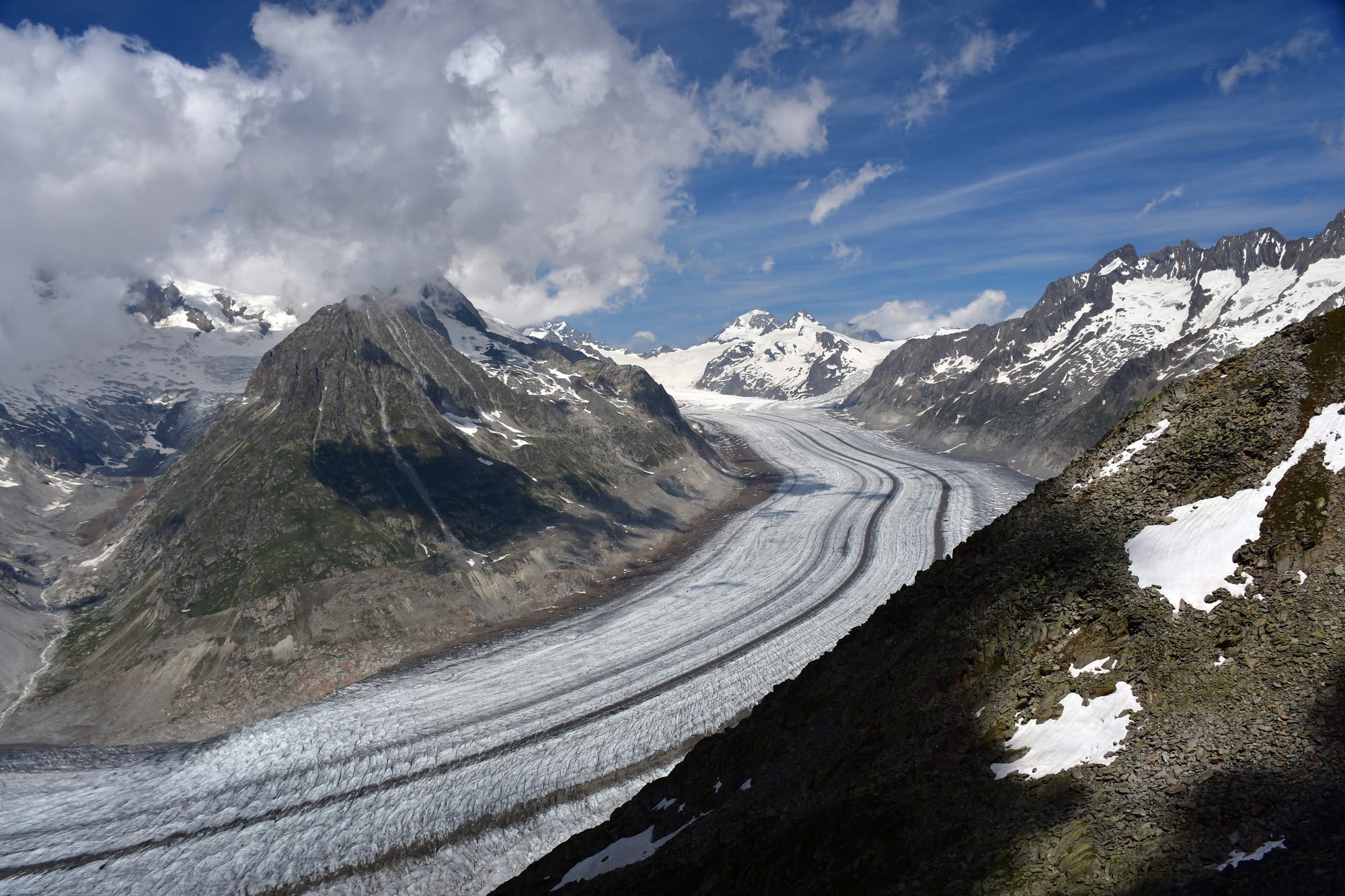
The 19th century brought the mountaineers. Edward Whymper's party made the first ascent of the Matterhorn in 1865, and four of its members died on the descent; the tragedy made Zermatt famous. Railways, hydroelectric dams, chemical works and tourism followed. Climate change is now reshaping the canton, with shrinking glaciers and landslides; in 2025 a glacier collapse buried much of the village of Blatten in the Lötschental.