History
These islands lay on the edge of Asia Minor and shared its early brilliance. Lesbos was the home of the poets Sappho and Alcaeus around 600 BC, and Aristotle studied the island's marine life in the lagoon at Kalloni. Samos, under the tyrant Polycrates in the 6th century BC, built a vast temple of Hera and a water tunnel cut through a mountain by the engineer Eupalinos; Pythagoras was born there. Chios claims Homer as a son, and Lemnos, sacred in myth to the smith-god Hephaestus, holds Poliochni, one of the oldest settlements in the Aegean.
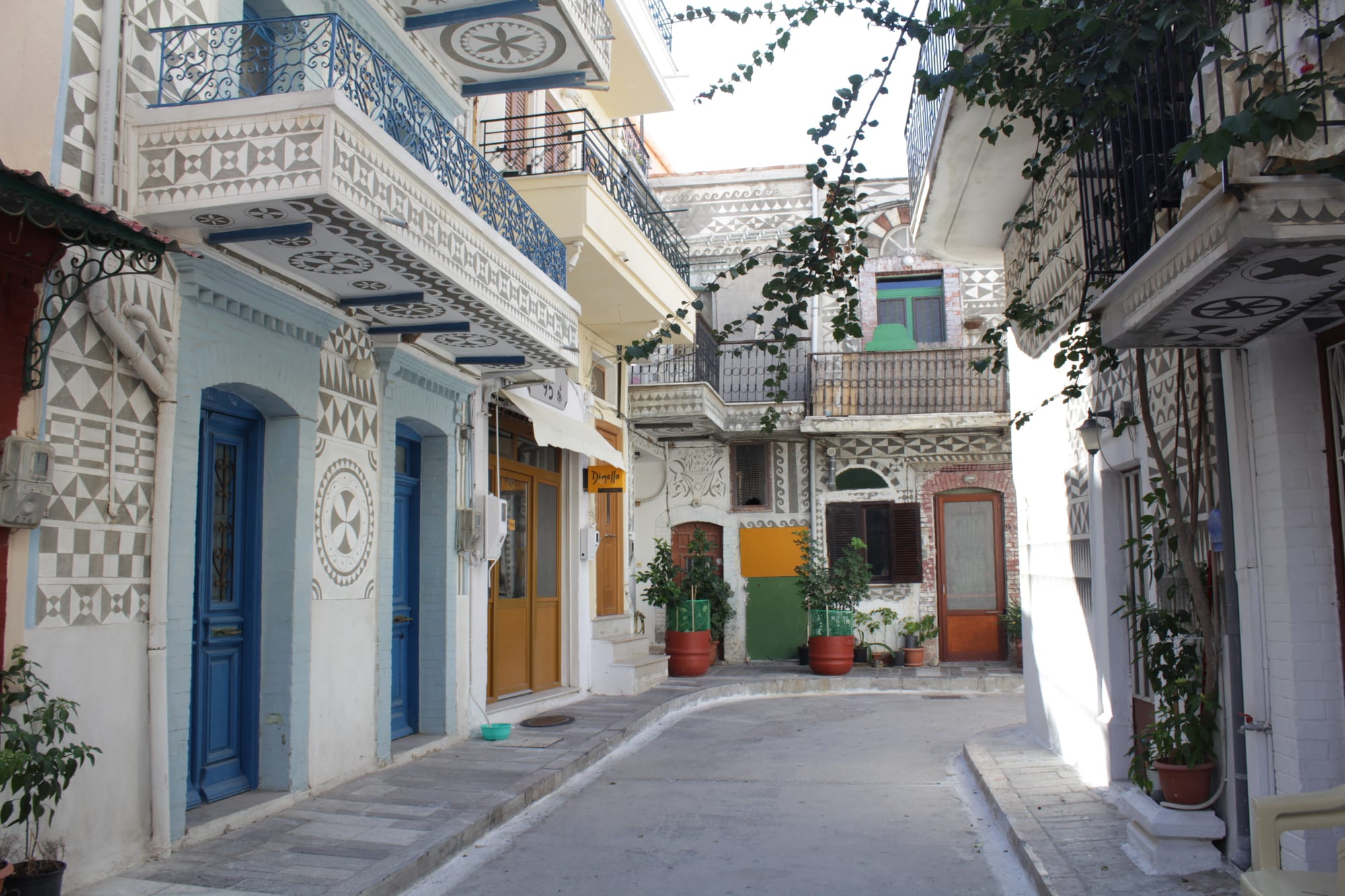
In the late Middle Ages Genoese families took over: the Gattilusio ruled Lesbos until the Ottomans captured it in 1462, and a Genoese company, the Maona, controlled Chios and its lucrative mastic trade until 1566. Under the Ottomans Chios remained rich and relatively privileged, which made its fate in the War of Independence the more shocking: after an uprising in 1822, Ottoman forces killed or enslaved much of the island's population, an event painted by Delacroix and remembered across Europe. Samos became an autonomous principality under Ottoman sovereignty in 1834.
The islands joined Greece in 1912 during the Balkan Wars. Lemnos's harbour of Moudros was the Allied base for the Gallipoli campaign in 1915 and gave its name to the armistice that ended the Ottoman war in 1918. After the 1922 defeat in Asia Minor, refugees arrived in large numbers. In the 20th century Ikaria and other islands were places of exile for left-wing opponents of the state, and in 2015 Lesbos became a main European landing point for refugees crossing from Turkey.