History
Macedon was a kingdom on the edge of the Greek world, ruled from Aigai — today's Vergina — and then from Pella, until Philip II (359–336 BC) seized the gold of Mount Pangaion, took and renamed Philippi and made himself master of Greece. He was murdered in the theatre at Aigai, and his son Alexander, born at Pella and taught by Aristotle of Stagira, led the army as far as India. Rome broke the kingdom at Pydna in 168 BC, built the Via Egnatia across it and saw its own republic die at Philippi in 42 BC, where St Paul founded Europe's first Christian community around AD 50. Thessaloniki, founded in 315 BC and named after Alexander's half-sister, became an imperial seat under Galerius around AD 300 and then the second city of Byzantium; its sons Cyril and Methodius gave the Slavs an alphabet, and Mount Athos received its first great monastery in 963.
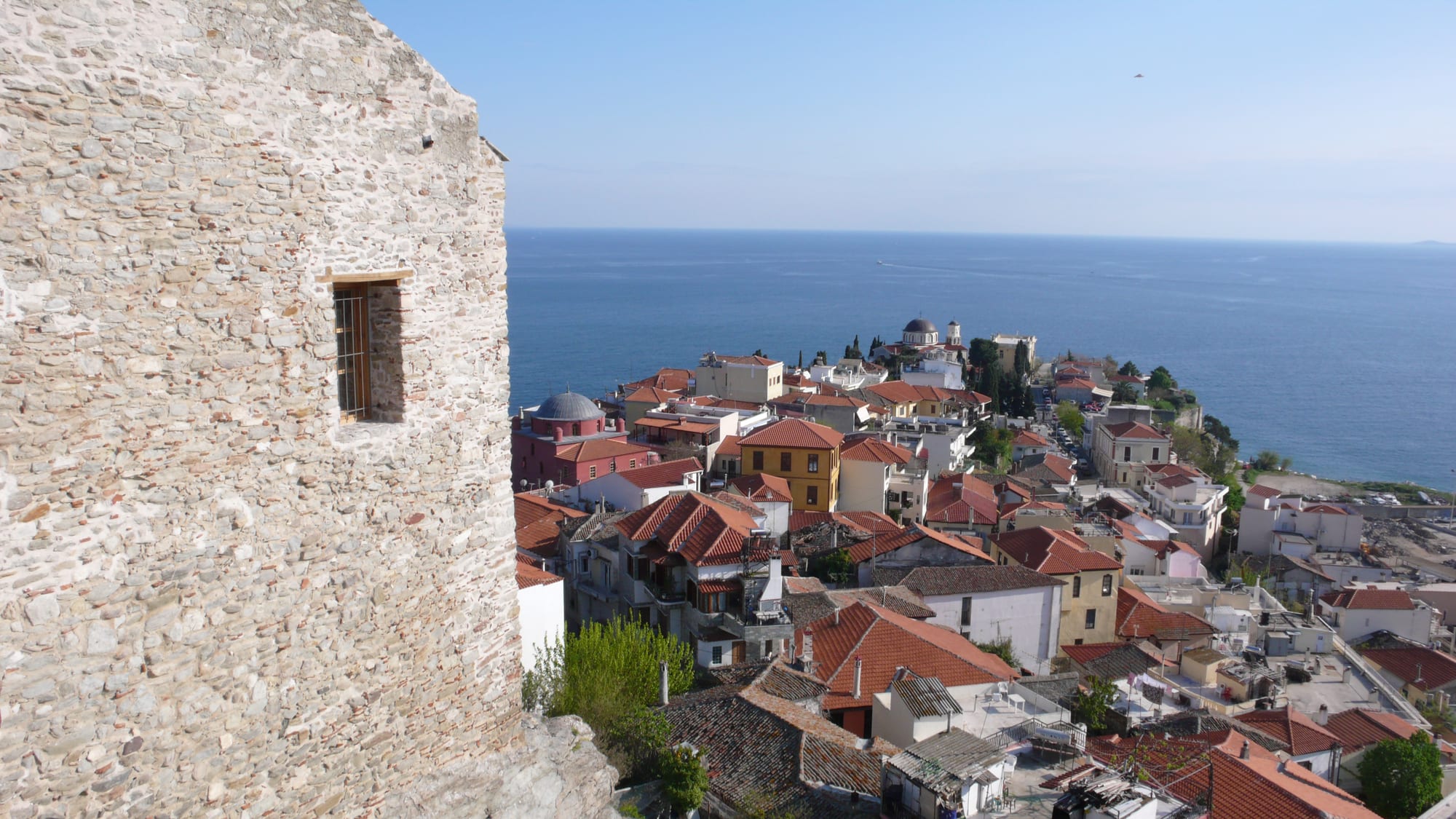
The Ottomans took Thrace and Macedonia in the late 14th century and Thessaloniki for good in 1430. After 1492 Sephardic Jews expelled from Spain made Salonica a largely Jewish, Ladino-speaking trading city for four centuries, while tobacco enriched Kavala and Xanthi in the 19th. Muhammad Ali, founder of modern Egypt, grew up in Kavala, and Atatürk in Thessaloniki in 1881.
The Greek army entered Thessaloniki in October 1912, on the feast of its patron St Demetrius; Western Thrace followed in 1920. A fire destroyed the centre of Thessaloniki in August 1917, and the population exchange of 1923 replaced most of the region's Muslims — those of Thrace were exempted — with hundreds of thousands of refugees from Asia Minor, Pontus and Eastern Thrace. In 1943 the Germans deported some 46,000 of Thessaloniki's Jews to Auschwitz, and few returned; the civil war ended on the mountains of Grammos and Vitsi in 1949. The Prespa Agreement of 2018 settled the dispute with North Macedonia over the name, and Thessaloniki's metro opened in November 2024.