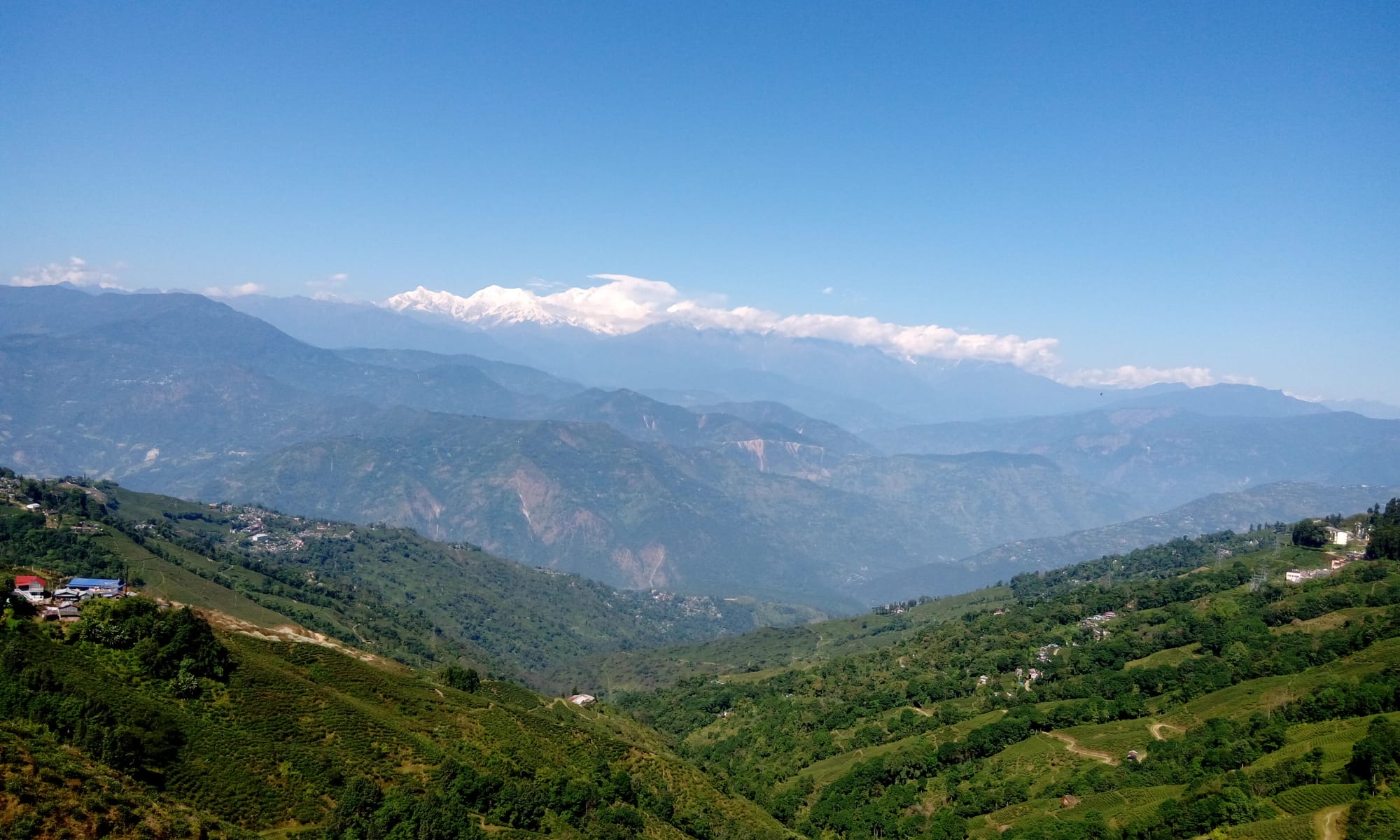
Green hills and tea terraces in the foreground, with layered blue ridges and a distant snow-capped range under a clear sky

India

Kolkata, Darjeeling & the East

The Kangchenjunga range seen across the tea gardens of Darjeeling district. (Souviknshm / Wikimedia Commons · CC BY-SA 4.0)

Eastern India, from the Bay of Bengal and the Ganges delta up to the Himalayan hills of Darjeeling and Sikkim, and west across Bihar and Jharkhand to the temple coast of Odisha — a region of the old imperial capital Kolkata, the birthplace of Buddhism at Bodh Gaya, tea gardens, and Puri, Konark and Bhubaneswar.

Explore Kolkata, Darjeeling & the East

History

Bihar was the core of ancient India's greatest empires. Magadha, with its capital at Pataliputra, modern Patna, grew into the Maurya empire under Chandragupta and Ashoka, and later the Gupta empire; the Buddha reached enlightenment at Bodh Gaya and Mahavira, the great teacher of Jainism, was born near Vaishali. Ashoka's bloody conquest of Kalinga, in Odisha, around 261 BC turned him towards Buddhism, and his edicts are carved into the rock at Dhauli. The Pala kings of Bengal later sponsored the Buddhist monastic universities of Nalanda and Vikramashila, and the Eastern Ganga kings of Odisha built the Jagannath temple at Puri and the Sun Temple at Konark.

Bengal, rich from rice and textiles, passed from its own sultans to the Mughals and then to independent Nawabs, until the East India Company defeated the Nawab at Plassey in 1757. Calcutta, which grew from a Company trading post founded in 1690, was the capital of British India until 1911, and the 19th-century Bengal Renaissance of Rammohan Roy, Vivekananda and Rabindranath Tagore made it India's intellectual centre. The famine of 1943 killed millions, and Partition in 1947 split Bengal, sending refugees into the city.

The hills followed their own path. Sikkim was a Buddhist kingdom under the Namgyal dynasty from the 17th century; Darjeeling was leased to the British by Sikkim in 1835 and turned into a sanatorium and tea district, and Sikkim joined India in 1975 after a referendum. Jharkhand was separated from Bihar in 2000. West Bengal was governed by the Communist-led Left Front from 1977 to 2011.

Culture & Customs

Bengali identity is intensely literary and argumentative. Tagore, who won the Nobel Prize in Literature in 1913, wrote the national anthems of both India and Bangladesh, and his songs, Rabindra Sangeet, are still sung in every household; Satyajit Ray's films, adda, long conversations over tea, football rivalries between Mohun Bagan and East Bengal, and passionate politics complete the picture. Durga Puja in Kolkata, listed by UNESCO as intangible heritage, fills the city for five days each autumn with elaborate pandals, and the wandering Baul singers of rural Bengal keep their mystic song tradition alive.

Darjeeling and Sikkim belong to a different world: Nepali is the main language, with Lepcha and Bhutia communities in Sikkim, and Tibetan Buddhist monasteries, prayer flags and the Losar new year sit alongside Hindu festivals. The demand for a separate Gorkhaland state has driven protests in the Darjeeling hills for decades.

Bihar speaks Bhojpuri, Maithili and Magahi, and its great festival is Chhath, when devotees stand in rivers to worship the setting and rising sun; Mithila's Madhubani painting is its best-known craft. Jharkhand's Santhal, Munda and Oraon peoples keep their own languages and the spring festival of Sarhul. Odisha's life revolves around Lord Jagannath at Puri, and its classical Odissi dance, Pattachitra cloth painting and silver filigree are regional arts.

Daily Life

Kolkata's metropolitan area holds around 15 million people and remains eastern India's commercial and cultural capital, a city of trams, yellow Ambassador taxis now slowly disappearing, crumbling mansions and India's oldest metro, opened in 1984. Its economy lags behind those of Mumbai and Bengaluru, and many young Bengalis leave for work elsewhere.

West Bengal has around 100 million people and lives from rice, jute, fishing and small industry. Bihar, with well over 120 million, is India's poorest large state, heavily rural and dependent on money sent home by migrant workers; Patna, the capital, has around two million people. Alcohol has been banned in Bihar since 2016. Jharkhand holds much of India's coal and iron ore, with the steel city of Jamshedpur, founded by the Tata company, and the capital Ranchi. Odisha, with over 41 million, has grown through mining, steel and ports, and has become known for its cyclone evacuations, which have sharply reduced deaths.

Sikkim, with under a million people, is India's least populous state and has promoted itself as fully organic farming; tea estates, tourism and the army dominate the Darjeeling hills. Across the plains, the day starts with tea and the morning fish market and ends with evening prayers and television serials.

Food

Bengal's cooking rests on rice, fish and mustard oil. Machher jhol is a light fish curry; shorshe ilish is hilsa cooked in pungent mustard paste, the prized fish of the monsoon; chingri malai curry is prawns in coconut milk. Kosha mangsho is slow-fried mutton, eaten with luchi, puffed fried bread, and Kolkata's biryani, with its potato and egg, traces back to the exiled Nawab of Awadh. Street food means phuchka, crisp shells filled with tamarind water, and the kathi roll, kebab wrapped in paratha.

Sweets are a Bengali obsession: rosogolla, spongy cheese balls in syrup, whose origin Bengal and Odisha dispute; sandesh, a fudge of fresh cheese; and mishti doi, sweetened yoghurt set in clay pots. Odisha counters with chhena poda, baked caramelised cheese, and the vast daily mahaprasad offerings cooked in the Jagannath temple kitchens, along with dalma, lentils cooked with vegetables.

Bihar's signature is litti chokha, baked wheat balls stuffed with roasted gram flour, or sattu, and eaten with a mash of roasted aubergine and potato; and thekua, fried wheat biscuits made for Chhath. In the hills the food is Himalayan: momos, thukpa noodle soup, fermented greens called gundruk, and hard chhurpi cheese, washed down with Darjeeling tea or tongba, warm millet beer sipped through a bamboo straw.

Attractions & Natural Wonders

Kolkata offers the white marble Victoria Memorial and its gardens, the Howrah Bridge over the Hooghly, the Kalighat and Dakshineswar temples, Belur Math across the river, the Indian Museum, the idol-makers of Kumartuli and College Street's bookstalls. South of the city, the Sundarbans mangrove forest, a UNESCO World Heritage Site, is home to the Bengal tiger.

In the hills, Darjeeling's tea gardens surround the town, with sunrise over Kangchenjunga from Tiger Hill and the Darjeeling Himalayan Railway's toy train, part of a UNESCO site; Kalimpong lies across the Teesta valley. Gangtok and the Sikkim Himalaya offer Rumtek and Pemayangtse monasteries, the high Tsomgo Lake, the Yumthang valley in the north and Khangchendzonga National Park, a UNESCO World Heritage Site.

In Bihar, Bodh Gaya's Mahabodhi Temple, a UNESCO site, is surrounded by monasteries built by Buddhist countries; the ruins of Nalanda University, also UNESCO-listed, and the hills of Rajgir are nearby. Jharkhand has the waterfalls around Ranchi and the Jain pilgrimage hill of Parasnath.

Odisha's golden triangle links Bhubaneswar's temples, including the Lingaraja and the carved Mukteswara, the rock-cut caves of Udayagiri and Khandagiri, Puri's Jagannath temple and beach, and the UNESCO-listed Sun Temple at Konark with its stone chariot wheels. Chilika Lake, a vast coastal lagoon, has migrating birds and Irrawaddy dolphins, and the village of Raghurajpur is home to Pattachitra painters.

Cities in Kolkata, Darjeeling & the East

Planning basics

Budget

The east is one of India's cheapest regions. Kolkata is far less expensive than Delhi or Mumbai for hotels and food, and Bihar and Odisha are cheaper still. Prices rise in Darjeeling and Gangtok in the Indian holiday seasons, and shared jeeps, permits and heritage tea-estate bungalows add to costs in the hills.

Daily Budget Midrange
USD 40–95 (mid-range hotel, restaurant meals, a car with driver in the hills or Odisha)
Daily Budget Shoestring
USD 15–25 (guesthouse, street food and thalis, trains and shared jeeps)

Use Kolkata's metro and metered yellow taxis, and travel on shared jeeps in Darjeeling and Sikkim rather than hiring whole vehicles.

Safety

Kolkata is considered one of India's safer big cities, though traffic, crowds, heat and pollution take a toll. The hills bring landslides and road closures in the monsoon, and a glacial-lake flood devastated the Teesta valley in Sikkim in 2023. Cyclones regularly hit Odisha and Bengal. Parts of rural Jharkhand have seen Maoist activity, and elections in West Bengal and Bihar are often tense.

Follow cyclone warnings on the coast, check road conditions before travelling in the hills in the monsoon, and avoid political rallies. Check current official travel advice before travelling.

Climate

The plains of Bengal, Bihar and coastal Odisha are hot and humid, with a heavy monsoon from June to September and cyclones striking the Odisha and Bengal coasts, mostly in spring and autumn. Bihar's winters are cold and foggy like the rest of the north. Darjeeling and Sikkim are cool and very wet in the monsoon, clear in autumn, and cold in winter, with snow at higher altitudes.

Summer
hot and humid, 35–40°C on the plains; 15–25°C in Darjeeling and Gangtok, with monsoon cloud and rain
Winter
pleasant, 15–27°C in Kolkata and Odisha; cold and foggy in Bihar; near freezing at night in Darjeeling

Transportation

Kolkata has an international airport, a metro and the huge Howrah and Sealdah stations. Darjeeling and Sikkim are reached via Bagdogra airport or New Jalpaiguri station, then several hours by road; the toy train is a slow alternative up to Darjeeling. Bodh Gaya is close to Gaya's station and airport, and Puri and Konark are an hour or two by road from Bhubaneswar.

Foreign visitors need a permit for Sikkim, and extra permits for its restricted areas.

Best Time to Visit

October to March for Kolkata, Bihar and Odisha, with Kolkata's Durga Puja in September or October the most memorable time to be there. The hills are best in October and November, for the clearest views of Kangchenjunga, and March to May, when the rhododendrons flower. Puri's Rath Yatra falls in June or July, and Bodh Gaya is busiest with Buddhist pilgrims in winter.