History
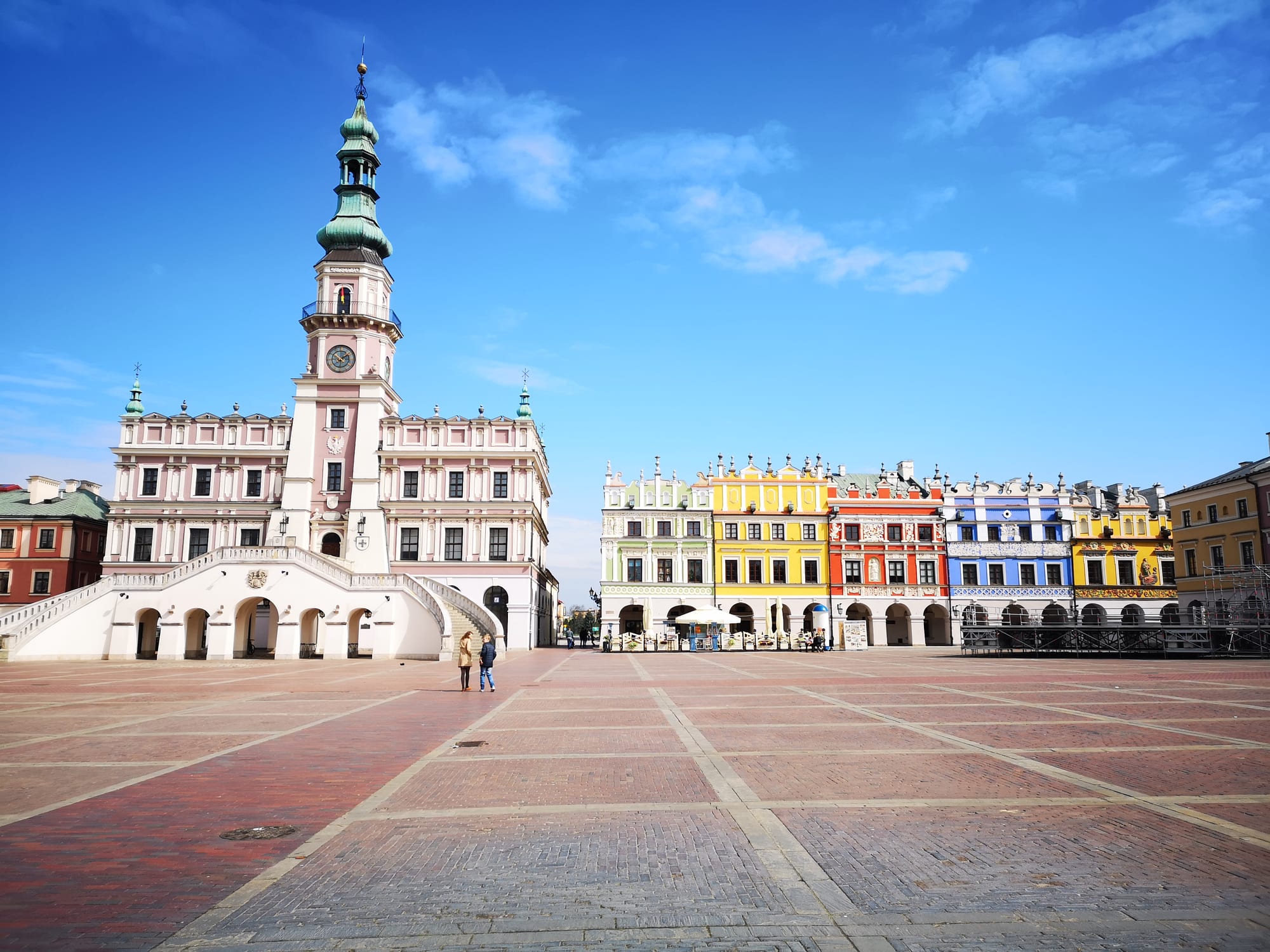
Lublin grew on the trade route between Poland and Lithuania and Ruthenia, and in 1569 it hosted the Sejm that signed the Union of Lublin, turning the dynastic link between Poland and Lithuania into the single Commonwealth. The region's magnates built private towns: Chancellor Jan Zamoyski founded Zamość in 1580, commissioning the Italian architect Bernardo Morando to plan a fortified Renaissance city, which later resisted the Swedes in 1656. The Lubomirskis built their castle at Łańcut, and Sandomierz, one of the oldest towns in Poland, was the seat of a medieval duchy and province.
Jewish life flourished here for centuries: Lublin was a centre of Jewish learning, and the Hasidic courts of Leżajsk and Lublin drew followers from far away. After the Partitions, Lublin and Kielce fell to Russia and Subcarpathia to Austrian Galicia, where the Przemyśl fortress endured a long siege in 1914–15.
In the Second World War the Germans built the camps at Majdanek, on Lublin's edge, and at Bełżec and Sobibór, where most of the region's Jews and many from across Europe were murdered. After 1945, the communist state deported Ukrainian, Boyko and Lemko villagers from the Bieszczady, above all in Operation Vistula of 1947, leaving the mountains largely empty. Lublin's strikes of July 1980 came just before those in Gdańsk, and since 2022 the region has been a gateway for refugees and aid to Ukraine.