History
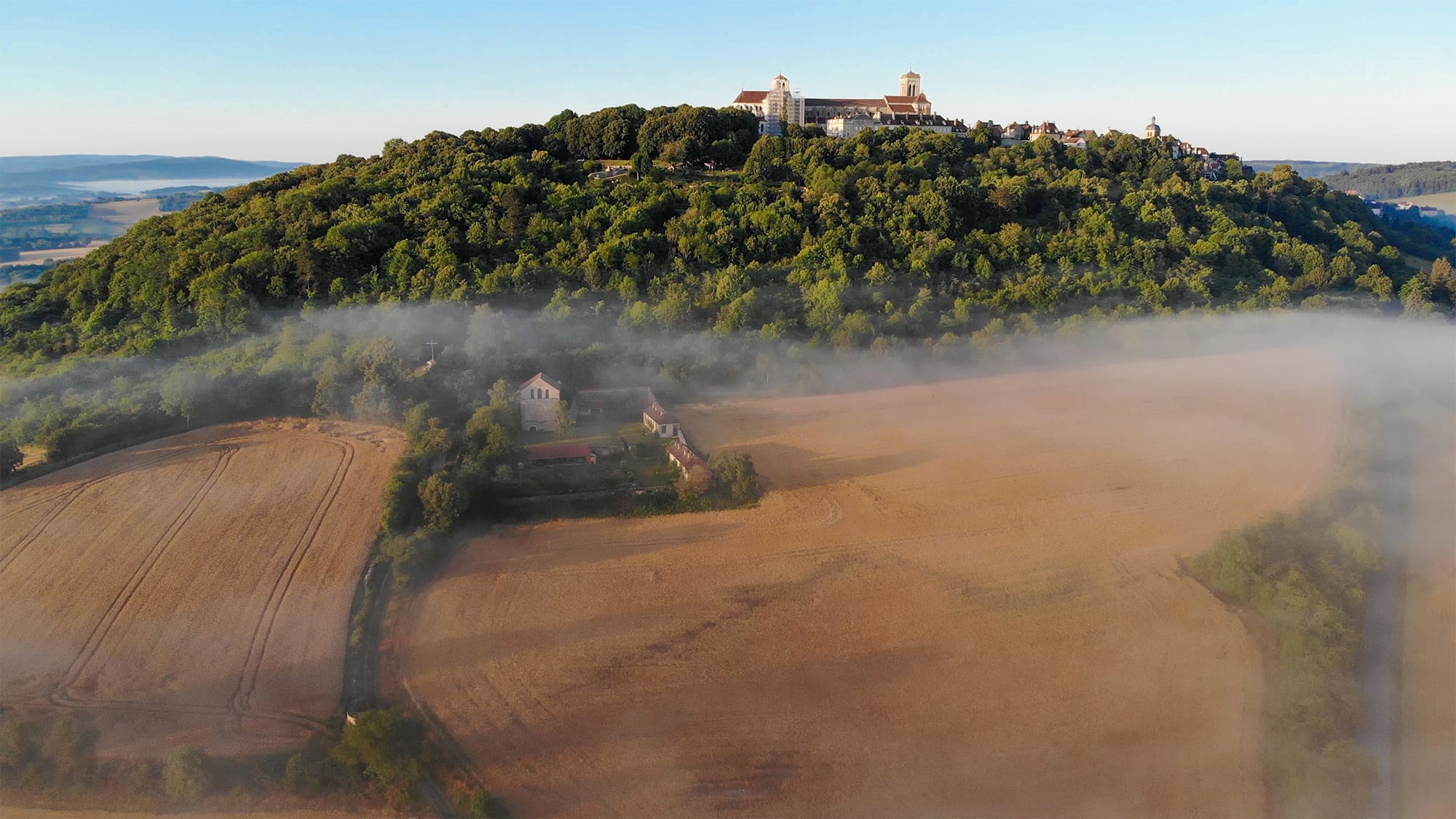
Before Rome, the Aedui ruled much of Burgundy from their hill-town of Bibracte, on Mont Beuvray in the Morvan, and it was at Alesia, in the Côte-d'Or, that Julius Caesar defeated Vercingetorix in 52 BC. Autun grew into a Roman city, and in the 5th century a Germanic people, the Burgundians, settled here and gave the region its name. In the Middle Ages Burgundy became the heart of Western monasticism: the abbey of Cluny, founded in 910, led hundreds of daughter houses, and Cîteaux, from 1098, gave birth to the Cistercian order. At Vézelay, Bernard of Clairvaux preached the Second Crusade in 1146.
The Valois Dukes of Burgundy, from Philip the Bold in 1363 to Charles the Bold, who died in battle at Nancy in 1477, built a state stretching to Flanders and ran one of Europe's most brilliant courts from Dijon. After Charles's death Louis XI took the duchy for France. Franche-Comté, the "free county" of Burgundy, passed instead to the Habsburgs and was ruled from Spain until Louis XIV conquered it; it became French in 1678, and Vauban fortified Besançon.
Industry arrived in the 19th century: Schneider's steel at Le Creusot, Peugeot's factories around Montbéliard and Sochaux, and watchmaking in Besançon and the Jura uplands. Belfort held out through a long siege in 1870–71 and remained French. The two regions were merged in 2016, with Dijon as capital.