History
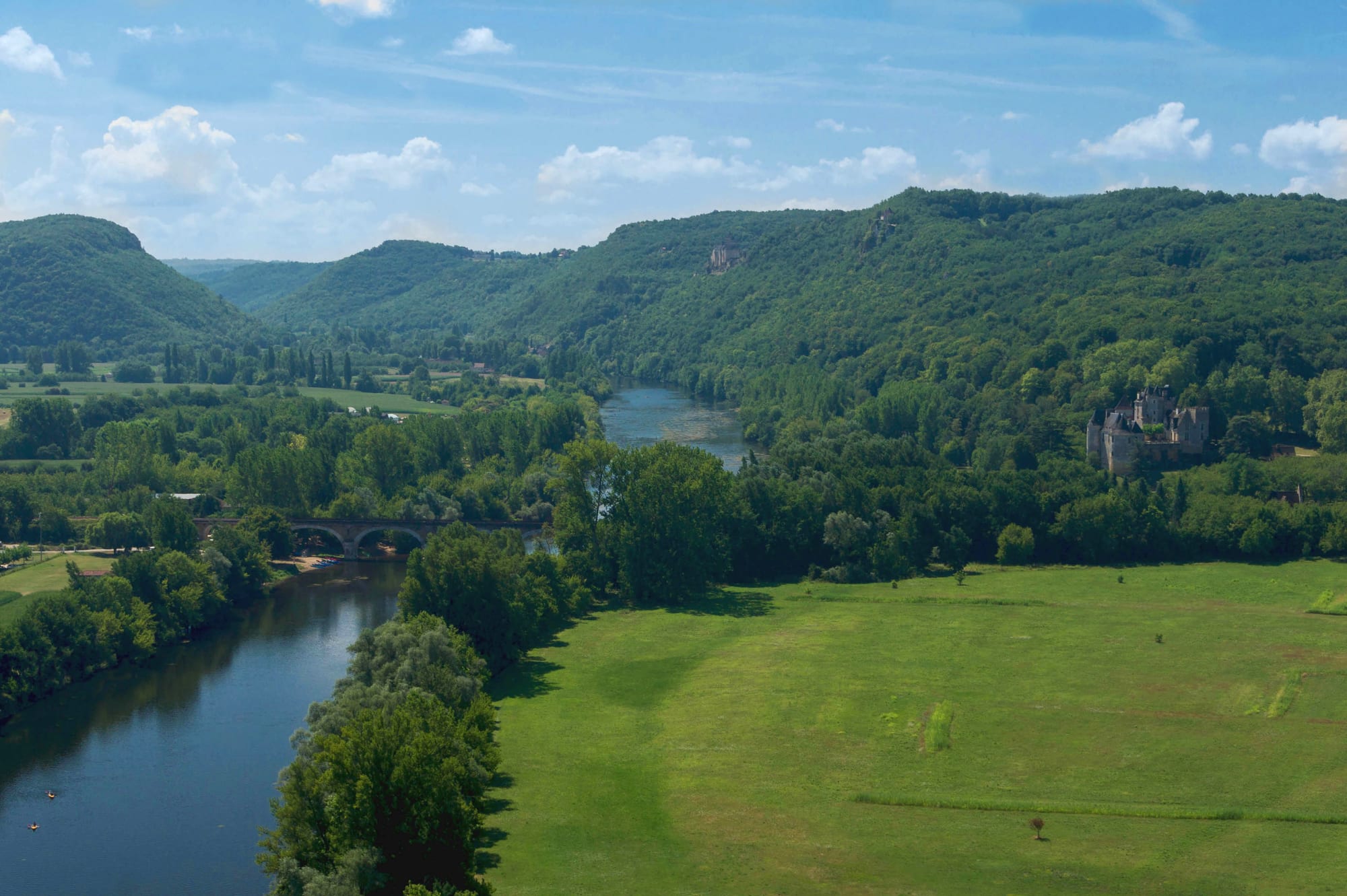
The Vézère valley, a tributary of the Dordogne, holds one of the densest groups of prehistoric sites in Europe: the rock shelter at Les Eyzies gave its name to Cro-Magnon people, and the painted cave of Lascaux, found by teenagers in 1940, dates back around 17,000 years. Rome made the south-west the province of Aquitania, with Burdigala (Bordeaux) and Saintes as major towns, and Saintes still has its Roman arch and amphitheatre.
In 1152 Eleanor, Duchess of Aquitaine, married Henry Plantagenet, who became Henry II of England, and for three centuries Bordeaux was English. Its red wine, known as claret, was shipped north, and the connection ended only when the French won the Battle of Castillon in 1453, closing the Hundred Years' War. La Rochelle became a Protestant stronghold and fell to Richelieu in 1628 after a long siege, while Henri IV, the first Bourbon king, was born in Pau in 1553.
In the 18th century Bordeaux grew rich on the colonial trade, including the Atlantic slave trade, and rebuilt itself in classical stone. Limoges became famous for porcelain after kaolin was found nearby. In June 1944 the SS massacred the people of Oradour-sur-Glane, and the ruined village has been kept as a memorial. The region was formed in 2016 from Aquitaine, Poitou-Charentes and the Limousin, with Bordeaux as capital.