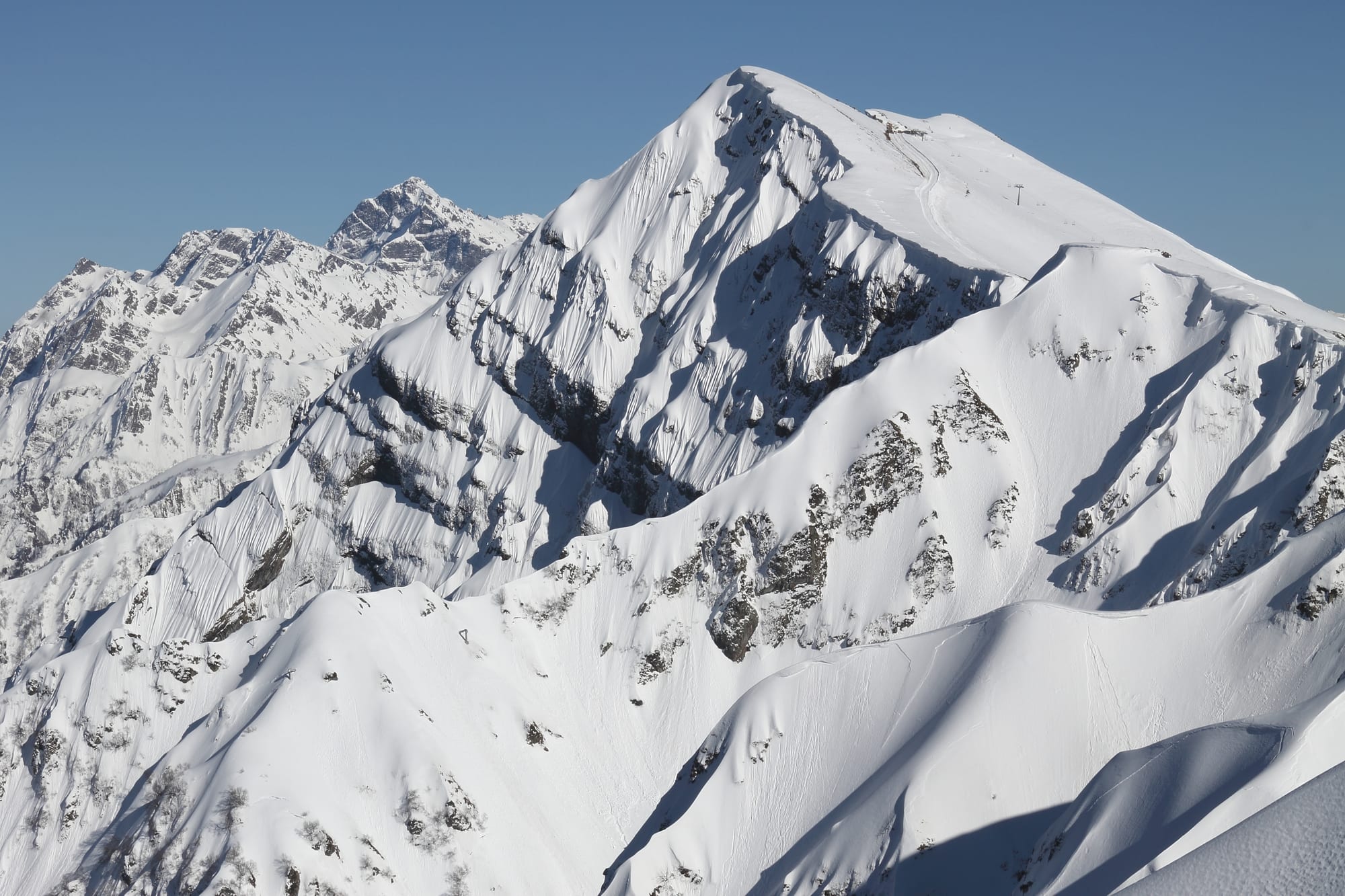
Snow-covered mountain ridges and rocky peaks of the western Caucasus under a clear blue sky

Russia

Southern Russia & the Black Sea

The mountains above Krasnaya Polyana, seen from the top of the Rosa Khutor ski area in Sochi. (SKas / Wikimedia Commons · CC BY-SA 4.0)

The steppe south of European Russia, from the Black Sea coast at Sochi and the Kuban farmland of Krasnodar to the lower Don at Rostov, the Volga at Volgograd and Astrakhan, and the Buddhist republic of Kalmykia — Cossack country, now a key rear base for the war in Ukraine. This page is written to explain the region, not to encourage travel.

Explore Southern Russia & the Black Sea

History

The southern steppe has been a corridor of nomads and traders for millennia. Scythians and Sarmatians grazed the plains, and from the 6th century BC Greek colonists founded towns on the Taman peninsula and the Sea of Azov, among them Phanagoria and, at the mouth of the Don, Tanais, later part of the Bosporan Kingdom. The Khazars ruled the lower Volga in the early Middle Ages, and after the Mongol conquest the Golden Horde built its capital, Sarai, on the Akhtuba branch of the Volga north of Astrakhan. Ivan the Terrible conquered the Khanate of Astrakhan in 1556, opening the whole Volga to Moscow.

The frontier was held by Cossacks. The Don Cossacks governed themselves from Cherkassk on the Don and produced the great rebels Stenka Razin and Yemelyan Pugachev, and in 1792 Catherine the Great resettled the Black Sea Cossacks on the Kuban, where they founded Yekaterinodar, today's Krasnodar. The Oirat Mongols who became the Kalmyks arrived on the lower Volga in the 17th century. The Caucasian War ended in 1864 with the expulsion of most Circassians, the Adyghe, from the Black Sea coast to the Ottoman Empire.

The 20th century was brutal. The region was a stronghold of the Whites in the Civil War, and Cossacks were persecuted and deported afterwards. Tsaritsyn, renamed Stalingrad in 1925, saw the battle of 1942–43 that turned the Second World War, and in 1943 the entire Kalmyk people were deported to Siberia, returning only in 1957. Sochi grew into the Soviet Union's favourite resort and hosted the 2014 Winter Olympics. Since 2022 Rostov has been a key logistical hub for Russia's war in Ukraine, and in June 2023 the Wagner group briefly seized the city's military headquarters during its mutiny.

Culture & Customs

Cossack identity is the south's strongest: the Don and Kuban Cossacks keep their choirs, uniforms, horsemanship and Orthodox faith, and since the 1990s revived Cossack societies have taken on roles in patrolling and patriotic education. The Kuban speaks a Russian mixed with Ukrainian, known locally as balachka, a legacy of its Zaporozhian settlers. The Kuban Cossack Choir is one of Russia's best-known folk ensembles.

Kalmykia is unlike anywhere else in Europe: its people speak a Mongolic language and follow Tibetan Buddhism, with the Dalai Lama as their spiritual leader. The republic celebrates Tsagan Sar, the lunar new year in spring, and Zul, and its white stupas and prayer wheels stand on the open steppe. Adygea, the republic surrounded by Krasnodar Krai, is the home of the Adyghe, a Circassian people with their own language, Muslim faith, horse culture and the etiquette code adyghe khabze.

Astrakhan has long been a meeting place of Russians, Tatars and Kazakhs, with mosques beside Orthodox churches. Rostov-on-Don, once the most industrialised city of South Russia, is a centre of trade and transport; Taganrog is proud of being Anton Chekhov's birthplace. Victory Day matters above all in Volgograd, where the memory of Stalingrad defines the city.

Daily Life

Krasnodar, with about 1.1 million people, is one of Russia's fastest-growing cities, attracting migrants from the north with its climate and jobs. Rostov-on-Don and Volgograd each have about a million, Sochi about 450,000 and Astrakhan around 470,000, while Novorossiysk, Taganrog, Shakhty, Maykop and Elista are smaller centres.

The Kuban and the Don are Russia's breadbasket, with wheat, maize, sunflowers, sugar beet, rice and vineyards on rich black earth, and Novorossiysk is one of the largest ports on the Black Sea. Volgograd has heavy industry, Astrakhan gas and fishing, and Sochi a year-round tourism economy. Kalmykia and Adygea are among the poorer regions, with livestock farming on the steppe.

Life follows the heat: early starts, a slow afternoon, and evenings on the embankments of the Don and the Volga. Since 2022 the war is close. Military traffic, refugees from Ukraine, air-raid alerts, closed airports and drone strikes on refineries and ports are part of daily life, and many families have men serving at the front.

Food

This is Russia's most abundant kitchen. Kuban borscht, thick with beetroot, cabbage and meat, is the Krasnodar version of the classic soup, and Kuban markets overflow with tomatoes, peppers, peaches and apricots. Adyghe cheese, a soft fresh cheese, is sold across Russia, and the Adyghe also make spiced chicken and cornmeal dishes.

The rivers supply the Don and Volga tables. On the Don, fish soup ukha, dried fish and crayfish are eaten with beer; Astrakhan is famous for vobla, a salted and air-dried Caspian roach, and for sturgeon and its black caviar, now mostly farmed since wild sturgeon fishing was banned. Kamyshin, on the Volga in Volgograd Oblast, was long famous for its watermelon trade.

Kalmyk cooking is steppe food, built on the meat and milk of the herds. Tea is grown in the hills around Sochi, and the Black Sea coast produces much of Russia's wine: Abrau-Dyurso near Novorossiysk has made sparkling wine since the 19th century, and Tsimlyanskoye is a red sparkling wine from the Don.

Attractions & Natural Wonders

Sochi stretches along the Black Sea with its palms, beaches, the Olympic Park at Adler and Stalin's favourite dacha. Krasnaya Polyana in the mountains behind has the Rosa Khutor ski area and forest trails into the Caucasus. Further north along the Krasnodar Krai coast are Gelendzhik, Anapa and the Abrau-Dyurso winery, and inland Krasnodar has its long Krasnaya Street and the modern Galitsky Park.

Adygea has the limestone Lagonaki plateau, the Khadzhokh gorge and the Rufabgo waterfalls, on the edge of the Caucasus Biosphere Reserve. Rostov-on-Don has its riverside embankment and cathedral; nearby are the Cossack village of Starocherkasskaya, the ruins and museum of Tanais, and Chekhov's Taganrog on the Sea of Azov.

Volgograd's centrepiece is Mamayev Kurgan, with The Motherland Calls towering over the Volga, along with the Stalingrad panorama museum, Pavlov's House and the Volga–Don Canal. Down river, Astrakhan has its kremlin and Assumption Cathedral, and beyond it the Volga delta, protected in the Astrakhan Nature Reserve, with pelicans, herons and pink lotus fields reached by boat. Lake Baskunchak, a salt lake near Mount Bogdo, lies east of the Volga in the north of Astrakhan Oblast. Elista, the Kalmyk capital, has the Golden Abode of Buddha Shakyamuni, the Chess City built for the 1998 Chess Olympiad, and the open steppe beyond.

Cities in Southern Russia & the Black Sea

Planning basics

Budget

Prices are generally below Moscow's, except on the Black Sea coast in summer, when Sochi, Krasnaya Polyana, Anapa and Gelendzhik are among the most expensive resorts in Russia. Krasnodar, Rostov-on-Don and Volgograd are moderately priced, and Astrakhan, Elista and Maykop are cheap. Foreign cards do not work anywhere.

Daily Budget Midrange
USD 95–240 (mid-range hotel, restaurants, higher in Sochi in July and August)
Daily Budget Shoestring
USD 35–65 (guesthouse or hostel, canteens and markets, buses and suburban trains)

Expect Sochi prices to double in high summer and during the ski season; the Volga cities are far cheaper.

Safety

This is the region closest to the war. Rostov-on-Don hosts the command of Russia's Southern Military District and borders occupied Ukrainian territory; the port of Tuapse and the Volgograd refinery have been hit repeatedly by Ukrainian drones. Military movement is heavy, and photographing it can bring espionage charges. All national risks apply, including arbitrary detention and minimal consular help.

Most governments advise against all travel to Russia, and particularly to areas bordering Ukraine and occupied Ukrainian territory. Check current official travel advice before travelling.

Climate

Two different climates. The Black Sea coast from Anapa to Sochi is warm and wet, with Sochi humid subtropical and almost frost-free. Inland, the steppe of Rostov, Volgograd, Astrakhan and Kalmykia is continental and dry: summers are long and hot, often above 35°C, and winters cold and windy, with Kalmykia's eastern plains close to semi-desert.

Summer
hot everywhere, 28–38°C inland; 25–30°C and humid on the Sochi coast, with a warm sea
Winter
mild and rainy in Sochi, around 5–10°C; cold on the steppe, −5 to −10°C, with icy winds

Transportation

Long-distance trains link Moscow with Rostov-on-Don, Krasnodar, Volgograd, Astrakhan and Sochi, often overnight; the journey to Sochi takes a day or more. Several southern airports, including Krasnodar and Rostov-on-Don, have been closed to civil flights since February 2022, and those that remain open can be shut at short notice. Suburban trains connect Sochi with Adler and Krasnaya Polyana, and buses cover the steppe.

Plan around closed southern airports and sudden flight suspensions; overnight trains are often the more reliable option.

Best Time to Visit

May to June and September to October suit the Volga cities and the steppe, avoiding the fierce midsummer heat. The Black Sea resorts peak in July and August, and the Krasnaya Polyana ski season runs from about December to April. The lotus fields of the Volga delta bloom from July to August, and the grape harvest on the Kuban coast is in September.