History
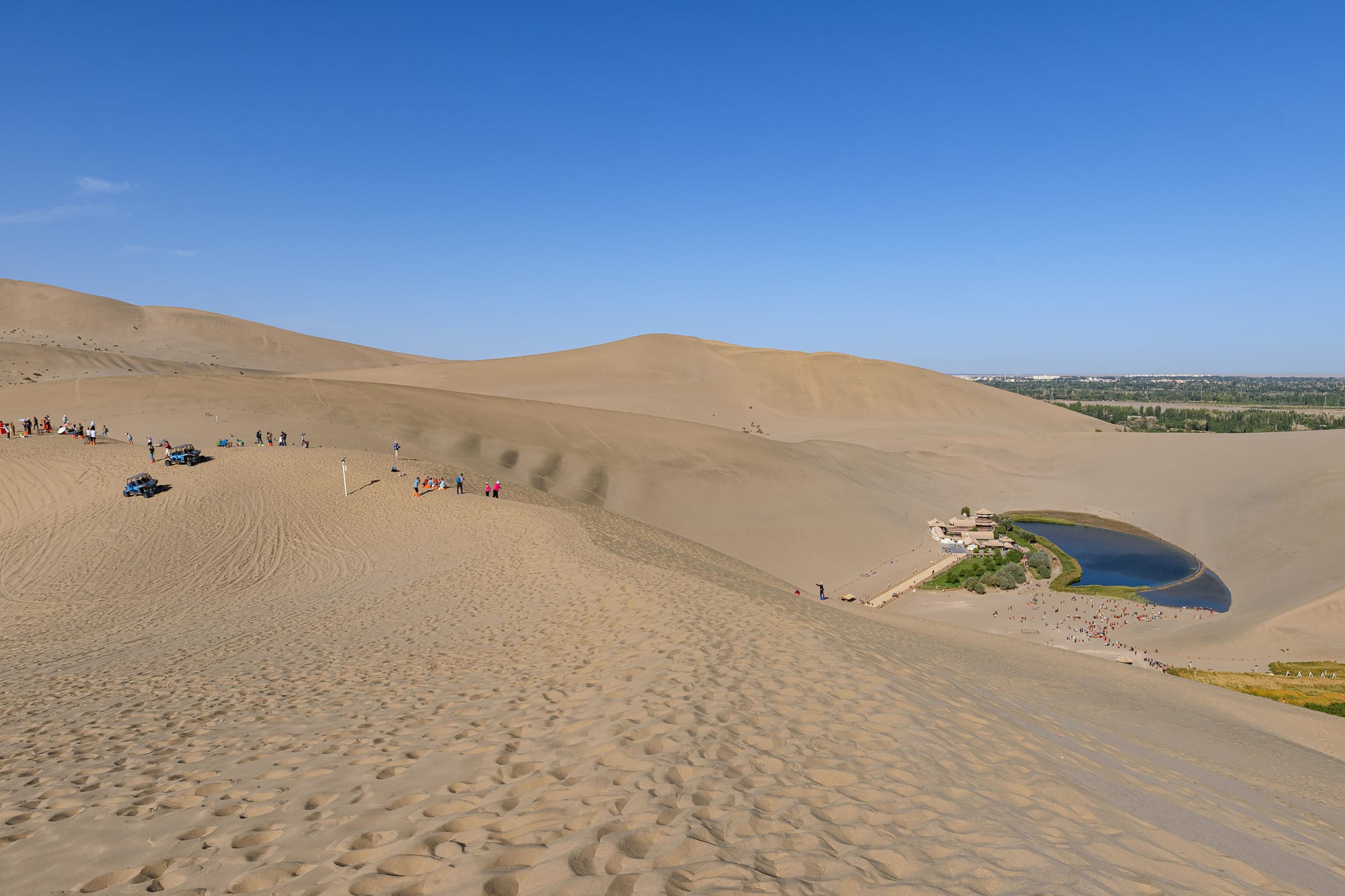
The Wei valley around Xi'an was the heart of early imperial China. The Zhou ruled from nearby Haojing; the Qin, from Xianyang, unified China in 221 BC, and their first emperor was buried with the Terracotta Army. Han and Tang Chang'an, on the site of Xi'an, was the eastern terminus of the Silk Road, and under the Tang one of the largest cities in the world. Zhang Qian's missions west in the 2nd century BC opened the route through the Hexi Corridor of Gansu, guarded by Great Wall forts that end at Jiayuguan, and Buddhism travelled east along it, leaving the caves of Dunhuang. The monk Xuanzang returned to Chang'an from India in 645 with scriptures housed in the Big Wild Goose Pagoda.
Other powers held the fringes: the Tangut Western Xia in Ningxia until Genghis Khan destroyed it in 1227, Tibetans in Qinghai, and oasis kingdoms in the Tarim Basin that later became Uyghur and, from the 10th century, Muslim. The Qing conquered the Dzungars in the 1750s, called the territory Xinjiang, "new frontier", and made it a province in 1884. Hui uprisings devastated Shaanxi and Gansu in the 1860s and 1870s.
In the 20th century the Communists ended the Long March at Yan'an in Shaanxi, and short-lived East Turkestan republics rose in Xinjiang in 1933 and 1944. The Xinjiang Uyghur Autonomous Region was created in 1955. After riots in Ürümqi in 2009 and later attacks, authorities from 2017 detained large numbers of Uyghurs and other Muslims, estimated at up to 1.8 million people, in facilities officially called vocational education and training centres. The UN human rights office said in 2022 that abuses there may amount to crimes against humanity, and the United States and several parliaments have called the policies genocide; the Chinese government denies any abuses and describes its policies as counter-terrorism.