History
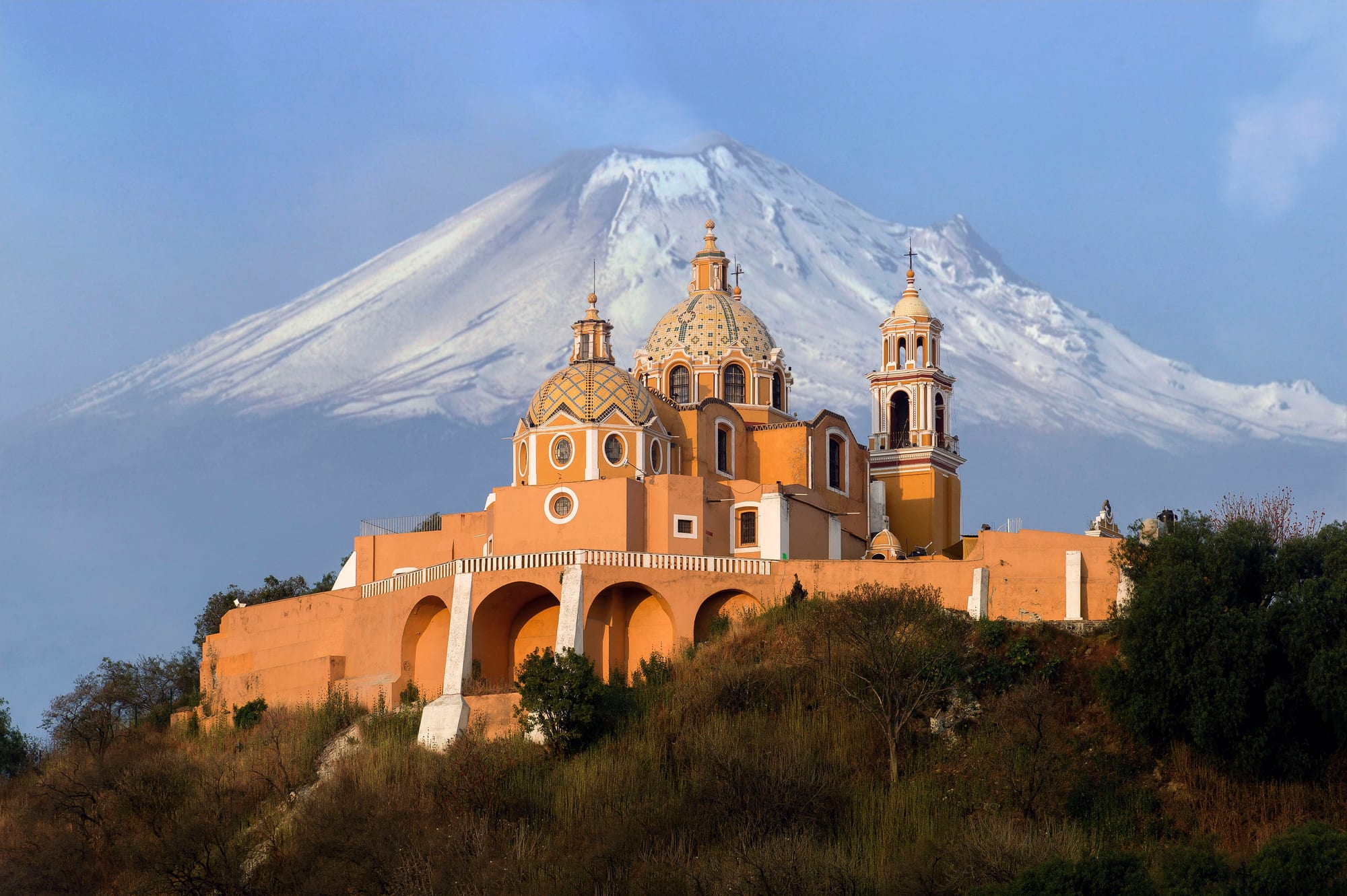
The Valley of Mexico was a basin of shallow lakes ringed by volcanoes, and it drew people early. Teotihuacan, founded around the start of the Common Era, grew by about AD 500 into one of the largest cities in the world, with perhaps 100,000 people living along its grid of streets, before it was burned and largely abandoned in the 6th or 7th century. The Toltecs later ruled from Tula in what is now Hidalgo, and Cholula, occupied for over two thousand years, raised the largest pyramid by volume in the world.
In 1325, by tradition, the Mexica founded Tenochtitlan on an island in Lake Texcoco, and their Triple Alliance came to rule much of Mesoamerica. The Tlaxcalans, never conquered by them, allied with Hernán Cortés in 1519; Cortés massacred Cholula's nobles on the way to the capital, which fell in 1521 after a siege. Mexico City was built on its ruins as the capital of New Spain, and the Spanish founded Puebla in 1531 as a town for settlers between the capital and the port of Veracruz. Silver from Taxco and Pachuca paid for the churches, and the lakes were slowly drained.
Independence and the 19th century were fought over here: US troops took Mexico City in 1847, and Mexican forces beat the French at Puebla on 5 May 1862, the origin of Cinco de Mayo. Emiliano Zapata's peasant revolution of 1910 began in the sugar country of Morelos. In the 20th century the capital swelled into a megacity; an earthquake on 19 September 1985 killed thousands, another on the same date in 2017 killed 370, and in 2016 the Federal District was renamed Mexico City, with greater autonomy.